The Beginning

Jos sr pic hammock

Jos sr pic bench


She is the face behind the face of the company, Crisis Averted. The real story. The reason it launched and exists. Most companies begin with credentials that include a 4-year bachelors degree with a major and a minor in specific fields of study. I’m often asked if I have a Psychology degree, if I’m a licensed counselor or if I’m paid by the public school systems. The answer is “no” to all. Which usually follows by a puzzled look of what exactly Life Coaching is or what these public speaking engagements could possibly include!

This companies credentials begin with the face in the picture. Her name is Josie. It began with a death by suicide. Then a phone call. The one that changes everything. The one where you realize never again would you be who you once were. It began with the cold hard truth of what that really looks like and how absolutely terrible it is to feel so helpless, not being able to save another human being from the depths of their own hell. Even worse, was not knowing it was anywhere near that bad. It followed with unending guilt, depression and sadness that words can’t describe. The heaviness of her pain was instantaneously transferred to those left behind.

Then, it was being forced to walk the same path she did. One I simply could never understand prior. It was being buried in a pillow that I never wanted to leave. Followed by the bottle. The bottle of booze, the bottle of meds, (never ending medications to “fix” me), a pack of marlboros and even more external toxicity at every corner. After learning how to overcome those, it was learning to feel again without constant numbing. And I am not going to lie when I say that was more painful then any hang over! From there was acceptance. Which, on days like today, can feel light years away. Then there was forgiveness of self. Shit, that one my friends, is the toughest mountain to climb!

11 years ago, I wouldn’t have guessed this is what would’ve stemmed from something so atrocious. There was this silent pull to keep moving, even in the depths of chaos. Blindly putting one foot in front of the other. Stumbling backwards, falling, getting back up. Doors slammed shut, while others opened. This company, this mission, me, as a person – stems from her, her life and even more so, her death and the lessons that followed. They are my credentials, they are more then any text book or shiny degree could offer. Its debt comes with one that no number can justify. It began with the worst outcome imaginable and has turned into what I can only hope, will be the best thing possible. I can’t save her, perhaps she was never ours to save. I can’t go back and redo one single second of it. But I can change it from here on out.

You see, it isn’t about mental illness, it’s about mental health. It isn’t about fixing, it’s about growing. It isn’t about numbing, it’s about feeling. It isn’t about resistance, it’s about acceptance. It isn’t about them, it’s about us. It isn’t about external blame, it’s about internal peace. It’s about learning all of these, and then continually relearning them over and over again. It’s about what we’re here for. The life we want to live, one with passion, purpose and fulfillment. And most of all, it’s about healing.

http://www.crisisaverted.org

You aren’t alone and your story isn’t for nothing.

Jos and I senior pic

Jos & I country fest 06

Our Youth

Customized Class 1

After listening to hundreds of students feedback ranging from Jr. to Sr. High, I can’t help but wonder if I would know my own child’s response if it were in front of me. In fact, I wonder if most parents would know their know their child’s response. We’re so good as parents, teachers and adults of just assuming we know best. We assume that because we like something, our kids will too. We assume they don’t see parts of us we don’t want them to see. We assume they don’t pick up on the silence, on the tone, or the expectations we place before them. We assume that because our experiences have been a certain way, theirs must be the same. And that’s assuming that any would engage in these deeper levels of conversation, with true honesty. I’m guilty of all of the above.

How many times do we, as parents allow our kids the platform to speak outside of “how was your day?” How many times do we take time to consciously engage in deeper conversations, on a more regular basis. How often do we self reflect on where things within our homes may need attention before pointing the blame on our kids or teachers? After all, our kids are simply repeating most of our own behaviors. Are we taking the time to really listen? I know I’m good for wanting to just fix it, or make it go away, instead of letting them feel and learn that feeling is part of it, even the not so pretty stuff. I want to make it all better instead of allowing them to speak for themselves and have a voice. Also guilty on all charges.

Are we aware of the apps that are on their devices, the messages or snaps being sent? Would we realize if they were self harming? Would we have any clue that the reason they’re acting out may have more to do with what’s happening on a device, at school or at home, then perhaps even the current situation? Would we know if they were hurting to the extent they’ve considered ending their lives? Sounds intense, right? Well, I invite you to get a glimpse into their lives, because I can promise you, it can be far different then they sometimes lead on, and these are plenty of our own children answering with these responses. Now that we’ve heard from parents and teachers, please, take the time to read, to listen and to engage in these deeper conversations in your homes. They’re so desperately needed. They have voices, not only do they need to be heard, but they deserve to be heard, for they’re powerful.

*Please note: The intention of this entry isn’t to shame anyone, it’s simply to bring awareness to our blind spots as adults, as we all have them, especially when it comes to our own children. It’s simply to bring awareness to today’s youth, they way they may be feeling and opening up a different dynamic of conversation at the dinner table.**

What do you feel is the biggest struggle being in SCHOOL?

“Keeping good grades and trying to be at your best 100% of the time”.

“Being able to balance sports, homework and relationships”.

“Feeling like I have to take on everything and make it perfect for my parents and friends to accept me.”

“Always trying to fit in, I never know what music I should listen to, sports I should play or things I should like, just to get people to like me”

“Always worried about my next test or what my grade will be and if I’ll get into college.”

“Constantly being told and reminded I’m not good enough”

“Trying not to get caught up in judgement. That’s all high school is, is constantly feeling judged by other students, friends and teachers”.

“Expected to stay focused all day everyday, at school and at home”.

“Feeling like teachers act like the students, trying to be cool or favoring or judging. Not having that safe place at school.”

“If I’m not in sports, I don’t belong”

“It can feel like a war zone some days, always trying to fit in and avoid being judged, it can be really tiring”

What is your biggest struggle at HOME?

“I am on my phone alot at home, most of us are. We used to eat together and do more things together, now I’m just always in my room on my device.”

“My parents fighting over who is more right or who is the better parent”

“Switching houses constantly. I feel like once I finally get settled into one house, I go to the next.”

“Always feeling like I need to be studying or on the court – it’s never enough.”

“My mom/dad struggle with anxiety and depression, it’s hard not to be sad when they’re sad or not get caught up in their emotional struggles.”

“Trying to make my parents happy”

“Having parents that don’t fight”

“Time management”

“My mom struggles with anxiety. It’s hard to watch and it makes me have anxiety when she’s having an attack.”

“Addiction. My dad drinks alot, it makes it really hard on my siblings and I, we just try to avoid him so he doesn’t get mad.”

“Watching my sister have really bad depression and has to leave the home to get help so she stops hurting herself.”

“My brother had a really bad last year, it was so hard on my family, I think it’s better now though. I hope so.”

“Listening to my parents talk smack about each other and to each other about who is the worst parent.”

How can those around you better SUPPORT you?

“Just listen”

“Don’t try and fix me all the time”

“Stop trying to make me be perfect”

“Just pay attention to me and what I’m saying and don’t yell when I do talk”

“Ask me more questions and check in on me from time to time”

“Let me be imperfect”

“Let me be me, I’m not you.”


Teaching in 2018

blog - teachers

Picture this: You’re standing in front of 25-30 bodies for an average of 40 minutes per day (this is best case scenario) for approximately 8-12 weeks (did I say best case?) once during Jr. High, once during High School. You have a large scale curriculum to cover and it’s mandated that you fit it all in. While in the midst of the standardized testing, making sure passing grades are upheld, questions are answered and every child’s needs are met as best you can, while also teaching on a level that each student can comprehend, with varying scales of learning abilities, you realize there’s a large gap that’s missing. During the hustle and the bustle of the days, caught in between the numbers game and what is going on in front of you, you come to the realization that there’s another child sitting in front of you that we, as a society, have forgot to recognize. This part of our youth is rarely, if ever seen, but if they are, chances are it’ll be during a Health Class.

There is a missing link, the one that goes beyond the test score, the homework, the grades, the performance, the sports, the chores, the work ethic or the college planning – this is what completes the missing link. It’s looking at one teacher refers to as, “the whole child”, instead of the compartmentalized, partial child – it is their mental and emotional well being.

As Health teachers they get the amazing opportunity to address important topics that spread beyond the average text book. These topics can be real, raw and heavy. But what they’re forced to realize more and more each year is that 1 class simply isn’t enough to address the ever growing (scarily increasing) need for mental, emotional and behavioral support for our children. Every year we’re reminded of the urgency to address these topics, and how depleted our youth have become.

Last week we were able to empathize with parents in their role of modern day parenting, this week, we are able to get a glimpse inside the classroom. I’ve had the opportunity to interview Health teachers from across SE MN, ranging from small to large districts to get better understand their role and input on what it is like to be a teacher in 2018. And it is truly important that we’re being open to their feedback and perspective.

What do you feel is the biggest struggle teenagers are facing today?

“I believe that the biggest struggle our youth face today is the ability to understand that where they are now is right where they are supposed to be. The pressure to “grow up”, “fit in”, “find their place”, “name their best friend forever” is so strong. I don’t think they quite understand that everything is building them for the future and the adult they are going to be. Too often, everything is rushed—curriculum, friendships, relationships, conversations…everything is cut off and incomplete.”

“It is hard to see how many children aren’t supported by their parents/families to help guide them on skills like advocacy, communication, empathy, coping skills, and boundaries.”

“Advocating for themselves and asking for help when needed especially during the early teen years.  As they get older fitting in seems to be a big struggle for many teens.”

What do you feel is the biggest contributor to mental illness crisis being on the rise? 

“Students are spending too much time in front of a screen and less time outside, moving and using their minds to be creative. Also, the lack of coping skills and emotionally absent parents along with unattended internet time with online social media and you tubers/bloggers, etc.  It’s just as important as parents that we’re aware and responsible for our screen time, so that we can set an example and have meaningful conversations with our children.”

“I honestly believe that social media is the biggest contributor to mental illnesses being on the rise, too many kids identify with their social media rather than the real world.”

“This is so hard to say in writing, but, I firmly believe that the lack of parental involvement is our biggest contributor to mental illness. By this I mean the lack of family dinners, using social media as a way to pass the time, the belief that in order for your child to “like you”, they need to be allowed more freedom. In the end, to be able to have an honest conversation with an adult is hard for so many of our youth. They aren’t used to conversations with parents and in turn aren’t sure how to talk to other adults about situations going on around them. When something bad happens, their first instinct is to post about the situation versus reaching out to an adult they can trust.”

“Listening to our youth when they are speaking and equally engaging in the conversation. It’s important they have outlets outside of a screen.”

What are some of the biggest hurdles you face being a teacher today?

“Students mental/emotional and behavioral needs are becoming more frequent and intense and we don’t have enough support for this.  It can be difficult when there is such a gap between the parents and the schools. If the kids aren’t supported at home, this forces schools to have to deal with the aftermath and we simply don’t have the time or funding.”

“Student accountability and parental support. Students are not held accountable for their assignments or their behavior to a standard that helps them recognize the importance of respect of others and self. More parents are blaming teachers for problems rather than taking responsibility for what is happening in the home, or choosing to have an open conversation about the situation.”

“Personally as a “young” teacher, one of the biggest hurdles I face is lack of respect from students and parents in the areas of judgement, along with a sense of entitlement that many students possess. I know that “times have changed” since I was in school and with the boost of technology, everything will, however I was hoping the respect for adults and respect for property/equipment wouldn’t. I understand that each case and each student is different and deserves a fresh start, but this can be hard when there’s an increase in lack of respect, manipulation and responsibility for self.”

What are things you see within the classroom that many be unaware of? (i.e. what is the feedback you’re hearing most from kids?)

*They comment that their parents have too high of expectations and they must excel in academics and sports.

*That they don’t see their parents for days, or they’re at work and not around.

*Their parents/step parents fight, drink, and don’t make time to listen to or engage with them.

*They don’t do much as a family; we are on our phones or laptops most days at home.

*They go to their room when they get home and stay there all night with little to no conversation.

*Their parents will not listen to them, or, that it’s no use to talk with them (however, this can also a part of low mental health perception and may not always be a reality).

*Their parents assume that sports and good grades make everything better and that they’re fine; or that they always want to be on their devices. They still want to know they’re cared for and about despite the grade, performance or if I’m bugging you because I’m not on a device.

What do you feel would be most beneficial to help support today’s youth to overcome these intense and worrisome obstacles?

“Health class is one of the few, if not the only classroom exposure we are able to discuss these important topics. (It isn’t easily embedded into Math or English 😉 Unfortunately, the MN Ed. Dept. only requires a semester of health in grade 10 and “an experience” at middle school. This can be challenging with limited time, especially for the amount of crisis like situations that can occur when these topics are brought to light. It’s astonishing to realize the weight these kids are carrying!”

“I would love to see outside mental health supports work with schools to provide services inside our schools rather than asking students to reach out after hours.  I feel like we could make a greater impact with resources inside our schools, with more prevention tools.”

“Hearing from more people who have experienced the same problems they are facing now would be beneficial for them. If real people, even others their age, were to come in and talk about their mental illness, drug problems, recovery or addiction, they are more willing to listen and can better relate to the material.”

“I believe that MN standards need to include an entire quarter and it’s own standards for a Mental Health class. This can include, but not limited too, coping skills/techniques, stress identification/awareness, scientific explanations of how the brain works, self-esteem and it’s meaning/importance, and also lessons on how brain development changes with age.”

“More funding to support these important issues. It needs to be at the forefront of our “to-do lists”, as it’s becoming increasingly more obvious.”

Was it helpful to gain better understanding as to what the role of our teachers are and identify with their struggles in the classroom? We would love to hear from you!

*Stay tuned to hear the perspectives of our youth in next weeks entry!*


Modern Day Parenting

For the first time in history, we are entering into an era of parenting that has been uncharted territory. In a world of quick fixes and instant gratification, constant distractions and 24/7 babysitters with the click of a button at our fingertips, it’s hard not to be confused and overwhelmed as a parent! In a short amount of time, our own minds have been warped into comparing ourselves to everyone else’s “highlight reels”, we’ve never been so insecure with our lives, our decisions and the actions of our children. We are the last generation to know what it was like to sit down to a home cooked meal on a regular basis, to spend our elementary years playing ball in the cul-de-sacs, only worrying about making it home for supper without a skinned knee after a game of kick the can. We didn’t experience they intensity of competition in sports, or at least not prior to Varsity level, and we certainly weren’t expected to put in significant practice time by the age of 10. We didn’t know what every other kid in school was doing at any given minute, and if we did, it was from a hand written note or a home phone call that our parents could sneak in on at any time. We knew that if chores weren’t done, we simply didn’t get to join in and the dynamic of a family meant carrying alot more weight then just calling them your sibling, it meant working together as a team and forming bonds far beyond any screen. We learned that good things take time, some times a long time, and sometimes, at the expense of blood, sweat, tears and heartbreak. But we also knew, we were going to survive it and come through stronger.

When we did wrong, we learned by consequence, and it wasn’t always a fun one, and certainly not an easy one 😉 We learned to fear and sometimes despise our parents, only to find out when we had our own children why they did the things they did. I mean, who the hell would’ve guessed they actually knew something and were right?! 😉 Pffff. Gotta love those lessons that keep on giving and sneak up like the karma they really are 😉

There are also many parts of being an adolescent that hasn’t changed through the decades. Such as making off the handle remarks and making really crappy decisions that sometimes didn’t pan out quite the way we had pictured (however, usually grateful not any worse then they did). The development of their brains and how each stage brings with it a new learning curve. How at the end of the day, they just want love, attention, affection and connection – after all – don’t we all? That throughout their entire adolescent career, they want to be accepted, not only by their peers, but also their parents, teammates and community. How they’re (we’re) bred to want to “fit in”, or that our minds (from a primitive stand point) are trained to think there’s a “them” and an “us”, thinking it has to be black or white. Or, wanting it all to make sense and have reason behind it, as if the “why” is going to change the outcome or circumstance.

It’s funny to think how much we’ve evolved in such a very short amount of time. The amazing advancements technology has brought with it, and yet how very scary it could be if we choose to stay out of touch with the repercussions of what could be and how our children may pay the price for it. You see, when we (I’m 34) got a good ol fashioned “basic” cell phone, we were roughly of the ages of 16-18. This just included texting and calling at the time. By the time we got smartphones or more advanced devices, we were mid 20’s. Meaning our brains were developed enough to realize the difference between social media and real life. Or the fact that Mario Kart and the real world weren’t the same thing. That the bullets on the screen and the one that came from the chamber of a loaded rifle were very different. Now, we’ve handed this next generation loaded weapons in the form of a controller, smart phone or electronic device with little to no education behind them. We give them to children at an average age of 3 years old without realizing, or perhaps caring, that we’re feeding the same brain receptors as that of a heroin addict. And we’ve done so without even realizing that their brains aren’t equipped in the way ours were. We forget that when they leave school, they no longer get to go home and just leave a bad day behind then, instead, they hear a ding on their device, and see it on repeat on a screen of someone that wants to take their even worse day, out on you. And we expect kids to have the mental and emotional capacity to discern between what is real and what isn’t – in all realms. Now we, as parents entering this new and confusing time struggle with ourselves to know what is safe and what is within the “normal” parameters of just exploring, as most adolescents do. I invite you to take a glimpse into the struggles of the modern day parent.

If you were to compare your childhood to your children’s, what would be 1 primary difference? And how do you think that difference has impacted the generations outcome?
“Affection. I didn’t grow up in a home with affection and it’s something I try and be mindful of in my home. It’s important for my son to know affection and that he is loved.”

“Social media, gaming and electronic devices. We never had these constant distractions from realities. “Connection” means something totally different, they’re always “connected” now, and they never want to leave the house! They don’t have a reason to move and have social skills.”
“Time, acceptance and unconditional love. It is nerve racking to see the way our kids are being pushed towards the state of constant perfection and distraction. They’re expected to constantly be busy or entertained. We were always given time from our parents, now it seems so limited with everything they have going on. It’s hard to keep a family structure.”

“Parents showing poor sportsmanship. It’s become all about the competition and expectations. It isn’t fun anymore. We learned alot in sports that taught us life lessons, and winning all of the time and setting unrealistic expectations aren’t apart of real life or healthy for kids to expect.”
“There’s so much more seclusion. Their guards are so much higher and they’re unable to cope with difficult or uncomfortable situations. They have no understanding of the impact on another. When we fought with someone, we were face to face, we knew the damage that was being done with our words and actions”.

“Patience. I thought my parents were short tempered, but I think I’m alot worse. I wish I could be more calm and allow them room to make mistakes without getting so upset.”

What do you feel is the hardest part/biggest pressure with modern day parenting?

“Knowing what are safe parameters to explore in and fail in, while they’re still at home. How are they going to learn for themselves if they don’t make some “bad” decisions?”

“Teaching my daughter she’s beautiful and to not compare herself to everyone else.”
“Judgement. Always feeling like you’re judged, no matter how good or bad your kid is being or doing.”

“Social media and electronics and the balance of them. What is a healthy amount of what is now being deemed as the new “social time” and what is teetering on addiction?”

“Finding balance between regulations/freedom vs “strict/controlling. Being able to hold your own as a parent when you see others allowing so much more. Trusting yourself and knowing that it isn’t about others, it’s about their safety and what you feel is best for that child.”

“Allowing them to learn on their own, without being concerned what others think of the way I parent or labeling my kid as bad. What happened to kids being kids? Sometimes just doing stupid things and having to learn the hard way are the best teachers.”
“Words – kids being kids vs hurtful attacks. What is normal sibling rivalry vs damaging another’s self confidence. I just assumed it was brothers being brothers, but I’m starting to see there’s more behind the words.”
“Adolescence is a very fragile time for their growth and their self-image, having social media seems to have intensified this process. “
Do you struggle to create boundaries in your home? If so, where is most challenging?
“For me, it’s more about the follow through and enforcement then creating the boundaries/rules. Remembering that true parenting isn’t letting them escape because it’s the easy way out for me.”

“Yes, I feel bad constantly taking things away because they aren’t upholding grades or chores. It feels like a constant battle at home and I question if it’s really making a difference.”

“No, there is no conversation in our home that is forbidden. Every topic is welcome to be discussed. My kids know that anything is welcome at the table.”

“I know I have to accept the fact that this is the new day in age, but I think we’re going to find a big backlash with allowing all of this freedom.”

“Enforcing consequences while being emotionally available. There’s alot more going on then we realize and it’s hard to be the enforcer, while knowing there’s an important emotional piece usually at play.”

Do you, as a parent, feel pressured to provide your children with electronics and allow them gaming and social media time?

“Absolutely.”

“Yes, when speaking to other parents, or the world, they make it sound like you’re crazy no too! The world has no boundaries!”
“Yes, I never know what is a healthy amount of time and when it’s too much”

“YES! Kids are handed devices younger and younger and it’s becoming the new expected norm to just let them have it. It’s become the new babysitter for alot of parents, and I’ll admit, there are times when I use it as leverage as well. I have alot of internal battle around this and I don’t think that my elementary aged children need devices, nor are entitled to be on ours on all of the time. And yet, they are one of very few, who don’t have it! So I struggle to know what is a “good age” or if I’m the only parent who believes this!”
Do you feel social media has added to the pressure of being a parent?

If so, can you elaborate?
“Yes, it’s constant comparison and constant judgement.”
Yes. Unable to keep anything straight. They can erase everything, you’re unable to see what was provoked or who is at fault. As parents we want to protect our kids, but also can be unsure if it’s ours that are doing the damage. It can be hard to discern and noone wants to own up, parents or kids!”

“Yes, it makes me doubt myself and I see all of these highlight reels of everyone around me and second guess if what I’m doing is right.”

“I feel a constant expectation to provide more and more. Alot of guilt, that it isn’t enough.”
“For the most part, no. But I also took myself off of social media, partially for that reason. I’m confident in my decisions as a parent, even though it isn’t the new “social norm”, I trust that I know best, even if it isn’t the most popular.”

How about you? We’d love to hear your feedback on this important topic! Please share your comments or concerns!

Resume of Life

Blog Resume of Life

As I began the fun filled process of drafting a cover letter and resume for a possible job prospect, I realize the difficulty in writing, trying to “sell” myself, while trying to dissect parts of me that are most suiting for this position. Instead, I end up writing a different type cover letter and resume, with 3 things running in my mind:

– If I had to sum my life up in 3-5 paragraphs, what would it be?

– Why aren’t more important questions asked and addressed during these processes, you can learn so much more about a person from their personal triumphs and failures then you can asking repetitive, surface questions.

– If you could give yourself advice, followed by the lesson of that decade, what would it be?

Welcome to my resume of life….I highly recommend everyone attempt writing their own, it’s amazing to see your life on paper, the triumphs and tribulations – all meshed together through the decades, forming pieces of you as you went, without even realizing it!

To The Director of My Career:

Due to the fact I didn’t fit well with the average student in the classroom or athletically in High School, I made myself known through rebellion instead. Even though my friends were members of the Honor Society and lettered in athletics, I had a knack for throwing a killer party, while also being the life of the party. Literally, life was one big party to me, whether under the influence or not, I lettered in communication!

Advice: you are more then what you’re made to feel by those around you and even more so, the stories you tell yourself to fit in. Don’t listen, nor cling to the negativity and insecurity – they are simply bad stories you tell yourself to mask the parts of you that feel as if she doesn’t fit in, in ways she’s “supposed” too.

Lesson – even the best party planner is not exempt from consequences and the realization that substances can only mask so much for so long. Know when you’re clinging to something too tightly, be it a person, place, thing, status or behavior – it doesn’t define you – I promise. Let it go, grieve it if you need too – but be ready for something better.

I entered my 20’s with the birth of my daughter, also known as my saving grace and the one amazing thing from this decade. For as scared as I was to be a mom, it became home immediately. The age of 23 marked what became the decade of trauma – or the 3 D’s – death, divorce and depression. This era included periods of wanting to tap out of life, more then stay in it. I was driven primarily by guilt, regret and anger, which were the few driving motivating emotions through the depression. I was reliant on needing to be “fixed” especially in the head, with that fixing came large doses of medication, then the need for more fixing with health ailments from their side effects. This became a new crutch, on top of the others that I whole-heartedly relied on. While trying to stay afloat and navigate my way through the fog, I don’t realize all of the things I’m learning about myself as I go.

Advice: Hold on – tight. These are the years of the most expansive self growth but hands down the most painful.

Lesson: You are the healer of you – keep going. You are an ocean – full of layers upon layers of traumas and triumphs, and every emotion in between. Even the ocean resurfaces some of it’s deepest buried treasures and skeletons. No one is exempt. You will always come home to you, there’s only so much hate, blame and anger you can extend outwards without realizing you are the only person that you will always have to face in the mirror.

My 30’s have been a breath of fresh air considering – like a phoenix rising from the ashes, I can finally see the light for more then a second in the drowning seas. Although the seas still manage to knock me around from time to time, swallowing me in the grief, heartache, guilt and shame – they’re reminding me I’m still human and what I have left to work on and heal. This is the decade where things have come to light again and again – an awakening of awareness. Just when I think I’m done working through something – it resurfaces in a new light – reminding me the work is always there, but so damn refreshing and liberating to push through once I’m able to see the view from the other side. Feels good to slowly but surely be free from the chains that have bound me through each era. Breaking away one at a time.

Advice: call it the new era of “mid-life crisis” if you may, but take it as an amazing opportunity to see life through a new lens. Even if it has to start over now, you’re still young enough to embrace it and start anew, while wise enough to have the past 2 decades’ knowledge to do it differently. 😉

Lesson: we’re all constantly learning, but learning to not think and act from a place of self hate has been the hardest to overcome. Its where you need to learn to be nicer to yourself, while breaking ideas around “right, wrong, good and bad” and do what feels right for you, giving yourself room to falter without judgement. We all have shadow sides, quit focusing and hating those parts so much, and accept it for what it is. You aren’t every skeleton. Continue to move along – it’s only going to get better.

Resume:

Teens (1999-2002)

  • Amazing communicator (first comment at every conference since Kindergarten!)
  • Plans great parties
  • Always smiling and laughing
  • Rebellion to fit in and stand out at the same time
  • Prefers nothing except English and Psychology

Twenties (2004-2014)

  • Learned the definition of being a mother
  • Traded in being a rebel for people pleasing
  • More concerned with fitting in and being a “good” mom/person and outside perception of me
  • Trial and error career, all customer service based
  • Survivor of suicide, divorce, depression, high cholesterol, high blood pressure, and being dangerously over medicated
  • Drowned in depression, guilt, shame, self-hate, self-loathing, vodka, marlboros and toxicity (it became my new norm and home)
  • Learned living instead of dying
  • Still an amazing communicator – just wanna talk about the deep stuff

Thirties (2014-current) * All still a work in progress 😉

  • Learned what healing what the inside out meant
  • Advocate for a new paradigm around mental health
  • Jack of all trades, master of few, and ok with that
  • Learning to embrace the shadow side of myself
  • Learner of forgiveness in every sense of the word, while continually being forced back to the drawing board to reexamine it every time it reappears.
  • Overcomer of anger, guilt and shame
  • Sees the world through the eyes of an Aquarian, a dreamer of the bigger picture
  • Embracer of all that is right and just on a humanitarian level
  • Awakened to the ways of the world, behavior, emotion and trauma
  • Believe there is always a core far beneath the surface of the current issue, and a ripple that expands from it
  • Did I say an amazing communicator? 😉

Education

  • Completion of the amazing ACTV8 program http://actv8.vanessafeils.com/
  • Currently still enrolled in life lessons of forgiveness of self
  • Learning mental illness doesn’t mean broken with a fixed sign on it – only room for growth and expansion of self awareness

**If you could sum up your life resume with a word or sentence for each decade, what would it be? Any advice or major lessons learned from each?**

*If this resonates, feel free to share on social media!*

Your Story

Blog - StoriesNovember 14th, 2007 marks the “9-11” of my world. A date that became a dreaded day in my history book, one that shook me to my core, a depth I didn’t know was possible. This day not only marked the death of my sister, but the death of me as the person I had become thus far in life. As the years have unfolded I’ve realized how many times I’ve died, how many old layers and stories I’ve shed. But as with any death, both physical and metaphorical – comes birth. It’s funny how much we don’t realize or focus on that. With every loss of a person, relationship, home or possession comes new opportunity – assuming we’re willing to see it. We spend so much time looking back at that closed door trying to figure out how we could’ve left it open, that we blind ourselves from seeing the beauty that lies ahead.

There are times I’ve wondered – had she not died, would I have still found my passion? Would I be transitioning out of the corporate world to focus on revolutionizing and bringing awareness to a new paradigm around mental and emotional health? Would I have learned the same valuable lessons personally so I could connect and teach others? Would I have realized that it has little to do with labels and more to do with the underlying components, the ones we’ve all suppressed and forced ourselves to bury and forget? Lets be honest, I’ve always been good at expanding and pushing the limits, but would I have done it in a way that caused more pain and disruption, instead of healing and liberation? Would I have started a blog? One that began with my own story and  shifted into the love of telling others real and raw stories? Ones not only of trauma and heartache, but of love and healing? Perhaps we’re all still going where we were originally headed, but her decision, one that left a ripple – shifted my course to this path. A path that has pushed me to the depths of some very dark valleys, and pushed me even harder up the mountains. I don’t want this to be my only story – her death was the start of my story, and one I hope overflows to many others stories. Your greatest strengths really do lie in your deepest pain. Those are the very wounds that are there for a reason you have yet to discover, the ones that will not only break you down – but to break you open. Those are the turning points in your life that are pushing to you to new depths. It isn’t about allowing this to be your only story, it’s about pushing yourself to a new one. It isn’t about going with the norm, it’s about reinventing the norm. And it isn’t about her death as much as it is the life that can be birthed from it. The realization that in a world that often feels hopeless, there is still plenty of it. And that starts with us – that starts with the death of old stories and the pain we’ve held so tightly too, and allowing ourselves to rise from it. Its about being true to ourselves, instead of attaching ourselves to others. This blog began with telling my own story, but has blossomed into the realization that we all have one to tell. It has made me realize it isn’t things or surface conversations that connect us, its real life pain and emotion that help us realize, we aren’t that different from each other. To realize we all have something to offer, because noone has the same story, with the same perspective and emotion as yours has held.

So I leave you with this – if you had to think of all the stories you had to tell, what one do you want people to know? Will you tell the one people see from the outside just to please their pallet? Or will you tell them the one that sits deep in your soul? Will you show up in the world in the way it wants you too, or will you show up in a way that offers a deeper truth? Are you allowing old stories to play on rerun, numbing what lays beneath the surface? I have many stories to tell over my life, and especially the past 10 years – all bits and pieces of me, but none of which own me. The story I want to tell 10 years later isn’t the same – in fact its message is very different – this time, its one of awareness, hope and liberation. And for that I am grateful. So thank you Josie for the never ending lessons as I navigate through, thank you for the reminder that your death is not for nothing and that all things can be born again if we allow them.


Beneath the Surface

Clouds Thailand 2017Have you ever stood in the mirror and wondered who you’re looking back at? Have you ever had moments of wondering how exactly you ended up here? Have you ever had times when a story is told and you can either replay it verbatim in your mind or barely remember being present? Are there times you’ve spent grasping for that moment in time to stand still? Or days you wish you would’ve held tighter too? Have you ever stopped and looked at your life like takes of a movie or book series – watching the chapters or sequels unfold? Have you ever been able to unidentify yourself with an old version of You – unable to connect with that part of your life anymore? Or perhaps find yourself grasping so tightly onto other parts – allowing them to hold more truth then they’re worthy of? Are there parts of your story you want to change, but unsure how? Of the thousands of shattered peices that make up you and your story, are there any you’d trade? Of the jigsaw puzzle what is are missing puzzle peices you’re still looking for? What peices are worn and tattered – ready to be recycled?

Do you look around wondering how it’s possible to raise children in a world so broken? Do you wonder how to support them in an age where media and electronics rule all? Do you wonder if their emotional needs are being met on a level that can best serve them? Are we failing as adults, parents, children and citizen? Even if we were – how would we make it better?

Craving connection on a level deeper then the surface? Feeling like you’re going through the motions of life without being able to stop and smell the roses? Wondering what your “theme” for this lifetime is? Ever wonder if there’s more beyond the everyday routine or what else this life could hold for you? Or better yet – have you taken the time out of the craziness of this life to ask or ponder? Because there is more to this rat race then we realize. There is still room for dreams beyond the ordinary. There is still room for healing, for revolutions beyond the everyday chaos. Do you believe it?

Outside In – ED with Angie

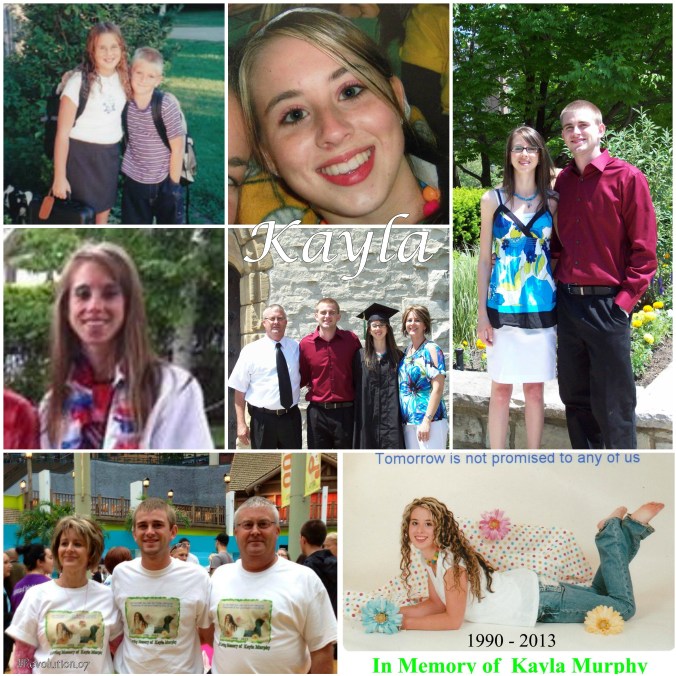
kayla-collage

For anyone that has ever watched anyone die of any type of a disease, you know how absolutely horrific it can be. To know that something is stronger then them, and even with significant help of modern medicine, they’re unable to fight it off or overcome it. To watch someone try and fight so hard  for something, that in the end can takes their life, is beyond heartbreaking. To know that no matter how hard you try, or the resources you put in front of them, it’s nothing compared to what has overtaken them. A feeling of helplessness overtakes every part of you as watch the disease win.

It is through Mallory and Kayla’s stories that we are given the opportunity to learn from those who have walked this lonely path and bring forth awareness to our own words and actions regarding such matters. Because even though it may be possible that your child won’t directly deal with these diseases, there’s a good possibility that one of their friends may. After all, 1 out of 2 girls between the ages of 11 and 13 consider themselves overweight. By you being educated on these topics, you can have simple conversations with your kids, spouse, students, grandchildren, nieces and nephews – which in turns opens the door for conversation about a friend they may know that is struggling. This conversation plants a new seed that trickles down, making others around you more aware of what they’re saying regarding body image, while also being a support for their peers. You are planting the seed of knowledge, awareness and hope – which is something we need more of in this world. This isn’t something to be feared – for fear only closes the door of safety, leaving adults and children alike to feel even more isolated and alone.

When we choose to break down the barriers of these conversations, we open up room for something bigger, an opportunity to offer support and acceptance to others. I hope you are able to take from all of these entries, a new respect for those who have endured this disease themselves, as well as those who have stood on the other side – forced to watch those they love be overtaken by something, that while they thought they could control, only in turn, began to control them. Here are their stories.

My name is Angie Murphy and I would like to share with you our story of how an eating disorder turned our lives upside down. Anorexia Nervosa by definition is an emotional disorder characterized by an obsessive desire to lose weight by refusing to eat. This crippling disease took the life of our oldest child, Kayla, on July 13, 2013, 18 days before her 23rd birthday. Kayla was everything we could’ve asked for, she slept thru the first night home from the hospital, potty trained at 21 months, and learned to talk at a young age. As Kayla grew up she always appeared confident. She tried basketball, played in band and was even named Miss Kellogg. In doing all these things Kayla began to strive for perfection, which in time, we learned that perfectionism is or can be a starting point of an eating disorder. I remember her doing home work in 9th grade, she would be up all night re-writing things to make sure it was perfect. This perfectionism started to play a roll in her health, she would be up very late every night, not getting enough sleep, not eating properly, and always stressed out. We as parents, nor her teacher understood what was going on. We just thought she was concerned about getting good grades for college and was working way too hard to obtain them.

It was right before Kayla started 10th grade, that she made a comment about wanting to starting eating healthier. This wasn’t something that seemed alarming because we were always on the run and had a tendency to not always eat healthy. By January Kayla had lost a lot of weight, again we attributed it to the stress and anxiety from all her home work. My husband, Marty, said she needed to see a doctor to figure out what was going on. It was at this time the doctor diagnosed Kayla with an eating disorder and that some of her organs were in the beginning stages of organ failure. Our Doctor then referred us to Park Nicollet for admission to treatment. Kayla was so good about cooperating, but too far under the control of the eating disorder that she didn’t really understand how deadly this disease could be. But then again, none of us really did.

As we were going thru this whirl wind of facing the reality that our daughter has an eating disorder, we were so confused. My sister-in-law, Jean, also had an eating disorder (anorexia nervosa and bulimia), being that we didn’t live near her, we were never educated on the mental illness. Like so many others, we didn’t understand why she just couldn’t eat.  Kayla and our son seen how the eating disorder would cause someone to act in such a self destructive manner. But because we were not educated on the mental illness none of us understood why it couldn’t be fixed. We didn’t understand the signs that had built up to  the point of where Jean was at. This really goes to show you how naive we were to this mental illness. Eating disorders were something people didn’t talk about. That’s why it is so important to talk about them – to stop the stigma and to educate everyone on the early signs.

When Kayla was admitted to Park Nicollet in the Twin Cities we were so scared. She was there for several weeks, but bound and determined to beat it! After inpatient and weeks of driving daily 180 miles round trip to the Twin Cities so she could do outpatient treatment, she had almost restored her weight and learned coping skills on how to fight off what is referred too as the eating disorders “voices”.

Between 10 and 12th grade Kayla worked with several psychologists, some helpful more helpful then others, but during this period home life was horrible. Between the four of us, I felt like I had to always be there to make everyone’s life better. My husband and son wanted to help, but that usually ended up in arguments. Being so naïve to the disease, we really didn’t know how best to help Kayla at home. Eating disorders are so difficult. Sometimes when you try to encourage them, you are actually feeding the disorder. The tension at home was an everyday occurrence. We are a very close family but there were days I didn’t know if we could continue to live together. Our son didn’t really say a lot, he watched, but I know it was very painful to see his sister go through this. Fighting this disease takes everything out of them and you

Kayla was in and out of treatment several times over the four years she was in college. The most frustrating thing was when she turned 18 and legally became an adult. The doctors no longer had to tell us anything and Kayla could discharge herself from treatment when  she wanted. She wanted to get better so bad but the voices were so strong that it was hard for her to always make decisions that were most beneficial for her overall health and well being.

There are only a few treatment centers in Minnesota and Wisconsin that work specifically with eating disorders. The problem at that time, was they were so inconsistent on treatment methods. Many would get the patient to a stable point and then release them to go home. There wasn’t much guidance on helping the patient and family find a qualified psychologist or psychiatrist. They didn’t teach you how to go grocery shopping or how to really cope outside the treatment center. There wasn’t family education centers or meetings like they have now, that help you better understand the disease, or support groups to speak to other families that are going through the same thing, for additional support.

I think my husband was more realistic about Kayla’s passing, he never said it, but always worried about losing her. I was always a little more optimistic. I spoke with Kayla everyday and she was always trying to fight the voices, reminding her to stay strong. We would search for new doctors to help in anyway possible. Because the disease was so strong on top of a genetic link, I didn’t think Kayla would ever really have a full recovery, but I never imaged it would take her at age 22.

We will never have the answers to understand why this happened. After Kayla passed we were amazed by how many people came forward and said if it wasn’t for Kayla and her story they wouldn’t be here today. Kayla was such a caring and giving person. She touched so many lives, and that is our inspiration. Through this whole journey she/we were never ashamed of what we were going through, so we will continue to tell her story and continue to reach out to help others that are also dealing with eating disorders. We will continue to help educate where we can, continue to help raise money for the National Eating Disorders Association and The Emily Program Foundation in the Twin Cities. Kayla lived by many sayings, but two of my favorites were – “be the best you can be today because tomorrow is not promised to any of us” and “we can stand still and watch, or we can stand strong and fight”.

Do you feel there are other driving factors that reinforce eating disorders aside from genetics?

Yes! Eating disorders aren’t the average dinner table conversation. Which is why it is so important to talk about them – to stop the stigma and to educate everyone on the early signs. Eating disorders can show up for a variety of reasons, they aren’t just learned behaviors, it can be genetic, or how they are “wired”. I also believe society plays a big role in these types of diseases. There is a lot of pressure to be beautiful, to be thin, to be smart, and to be successful. This is a lot of pressure for our children at any age and I feel these are also triggers that start the process. Anxiety, depression, OCD and/or feeling as if they can’t measure up or aren’t good enough, can be some of the beginning signs of eating disorders or the onset of mental illness. As they grow and these issues and thought process strengthen, they start to control their life. We start to look for ways to find control in our lives and as a result, our body chemicals used for coping – diminish. This makes it the perfect time for an eating disorder to develop. What starts as having control over something, eventually begins to control you.

This isn’t just something that effects girls either, I do feel young boys are taught that they should have that perfect “10” for a girlfriend. This leads to a lot of bullying to those that don’t fit the bill or measure up to the standards that our society, communities and peers place. It is both genders that have this perception of being “perfect” in all realms. There are continually more boys/men that are being treated for eating disorders as well. We see this when we look at the pressure sports puts on our athletes. Telling them they need to be lighter to wrestle or leaner to run faster. It’s another aspect of their life they feel pressure from and one they may feel they have more control over. This plants a seed that weight is the driving force behind their performance. We, as a society, put attention in places where it’s least effective and needed, planting seeds that grow into something damaging. Which begins building forests of judgement and stigma around important and necessary issues such as these.This may not be something that affects everyone, but with millions suffering from eating disorders it is definitely something to be concerned and talked about.

Have you noticed an increase in education around Eating Disorders since Kayla was in treatment?

Yes, it’s getting there. They are now working on requiring teachers to be more educated on the signs that may lead to early detection of an eating disorder. Early high school age is a common time for eating disorders to develop but there is no age limit. Eating disorders have been diagnosed in children as young as five, but people such as Jean, who passed away from Anorexia Nervosa wasn’t diagnosed until she was in her late 20’s. Again, it starts with the conversation around it, just being more aware of it, asking more questions, and being advocates for each other – within the homes and the schools. We are gaining ground, slowly but surely.

*If you or anyone you know may struggle with a possible eating disorder, please know there is resources and help! Please contact any of the following

NEDA (National Eating Disorders Association) https://www.nationaleatingdisorders.org/find-help-support

The Emily Program at https://www.emilyprogram.com/locations/minnesota

Foundations such as these are vital in our communities to help others struggling with Eating Disorders. Just as we help fund many other research facilities, these programs are equally important and often don’t the attention they deserve, due to lack of awareness. Please consider donating to The Emily Program Foundation at https://app.etapestry.com/onlineforms/TheEmilyProgramFoundation/donate.html

**Please share this important story and topic on social media, for you never know who could benefit!**

Inside Out – E.D. with Mallory

blog-mal-1-pic

 “Why can’t you just eat?” “Why don’t you quit eating?” “Why would anyone want to vomit after every meal? Gross!” “Why can’t you control the thoughts in your head?” “Why can’t you just be happy?” “Why can’t you just calm down?” “Did you see how much weight she’s gained – Ew!” “Put some meat on those bones” “If you were hotter – I’d date you” “God I’m so huge” “I hate my body” “I wish I looked like her” “Why did I have to get my mom’s hips?” “Is it so much to ask to be Beyonce?”

Welcome to the 21st century – where a majority of today’s focus rests on physical appearance. Too fat, too skinny, thighs are too big, ass could be bigger, take some from the gut, put it in the breasts, oh and the extra could be nicely added to the lips, I mean we hate to waste any, God only knows there’s plenty to spare! Welcome to the thought process of a majority of today’s population! If we don’t say them, I can guarantee we think them far more then anyone cares to admit! Whether about others or ourselves, the fact that this much thought goes into one aspect of the millions of things that make up a person – is a problem.

These are the ugly little seeds that are constantly being planted in not only our heads, but our kids’ heads on a daily basis. We stand in a check out line at the grocery store to thumb through the latest magazine with the latest named sexy actress, they watch commercials with half naked men and women, they hear adults talk about how much weight they’ve gained or how they shouldn’t be eating anymore, we hear men laugh and joke about sexist remarks or the ass on the waitress, or the lyrics to songs that reinforce what a “10” should look like.  Adults and children alike are constantly being reminded of the importance we’ve placed on body image – what seems harmless is often more harmful then we believe. We are setting precedence of what is the “norm”, leaving people to think that the only way to ‘fit in’, to be accepted or to be worthy of love – is to mirror these size 2 women, or ripped men. The fact is, that constant conversation, in any manner, around body image, good or bad – is the overall problem. You add these subconscious thoughts to a child who already struggles with things such as depression, anxiety, bi-polar, OCD or just plain fitting in, and you’ve set them up for a psychological disaster that could easily put them into place where control is no longer theirs.

This is a 2 part series on eating disorders, this entry showing what the inside looking out looked like from Mallory’s viewpoint. Angie will tell us what it was like from the outside looking in, watching her daughter endure, and eventually losing her life from Anorexia. This is another issue few care to familiarize themselves with because we often feel it’s nothing we need to worry about with our children. However, I think you, like I was, may be more surprised then you think about the stigma, signs and symptoms that can be associated with these diseases.

My name is Mallory Schad and I am in recovery from an eating disorder. My hope in sharing my story is that I can help shatter the stigma wrapped around mental illnesses. Yes, eating disorders are a mental illness, it’s not something you choose. I believe I was born with this disease. I believe I will always battle this disease, but most of all, I believe I can conquer this disease. Here is my story.

What was your “official diagnosis” and what does that mean via text book – more importantly – what did that mean to you? Has this been something that has always plagued you?

For as long as I can remember, I have struggled with body image. I was a “tomboy” growing up. I wasn’t your typical “girly girl” – I liked hanging with the boys, and dressing like one. My mom was supportive of my taste and always took me shopping in the boy’s department. She never tried to change me, nor told me I needed to look a certain way. So, for the most part, I dressed like a boy. That’s what I liked. Often times in public, I was mistaken as a boy. I felt ashamed of what I looked like, due to others’ reactions and perceptions of me. It was confusing. I was just being me. What is wrong with being me?

It was 7th grade where I finally gained some freedom from outside remarks regarding my gender. I was becoming more interested in make-up and grew my hair long. Funny how people stop ridiculing when you seem to appear “normal” or fit a mold that makes them comfortable. Aside from the harassment I endured from outsiders concerning my gender, there was another factor that I believe played a role in my developing disorder. As a 7th grader, I was a young athlete participating in sports at a higher level. Because of this, I became close with peers and fellow athletes that were older then me on a daily basis. I looked up to them and I felt like they had taken this shy little 7th grader under their wings. I was thankful for them. Exposure goes with the territory of hanging with students older than you. The topics I discussed with my friends in school, were very different from those that I overheard after school during practice. Topics discussed were natural for young girls their age, but for a 12 year old, it was very eye-opening. These girls were going through puberty and experiencing their bodies changing and developing. Naturally, I then became aware of my own body. I remember hearing others talk negatively about the size of their bodies. Comments were made about “being fat” or “having big legs”, etc. I remember a teammate crying at Cross Country practice, telling the coach she “had more weight to carry”, therefore had a harder time keeping up. I knew the weight had nothing to do with her performance. She was not overweight.

I stepped on the scale as a 12 year old and glared at the number I saw staring back at me – 89 pounds. You can’t let yourself get above 89 pounds. I remember feeling scared for having that thought go through my mind. I didn’t know where it came from, so I brushed it aside. I started becoming more aware of my changing body. I was gaining muscle as an athlete and noticed my thighs getting bigger. They touched when I walked. How come the other girl’s thighs don’t touch when they walk? How come my thighs are so HUGE??? “I HATE my thighs”. Fast forward to 9th grade. It was the beginning of Cross Country season. Apparently, I had grown over the summer people felt it was necessary to comment on other people’s bodies, as if it was worthy of discussion. I’ll never forget having 3 people in one day comment on my weight gain. “You look bigger out there running – Strong! Other people had noticed it too. That one stuck with me. I didn’t hear the “strong”, I heard the “bigger”. I went home after practice and paced in the garage. I was filled with rage. “Why was my body anybody else’s concern? I was pissed. I only wished I stayed pissed and didn’t turn that rage inward on myself.

I remained aware of my body through high school. As I entered 11th grade I started developing some disorder behaviors. I purged for the first time when I was 15. It wasn’t then that I fully engaged in this disordered behavior, but I definitely played around with it. During college, I experienced the inevitable “freshman 15”. I was 23 when I started binging and purging. This cycle went on for about 5 months, I’d lose weight and people would notice. They commented. I continued in my cycle of destruction. I saw a psychiatrist because I knew my behavior was unhealthy, but inevitably stopped going. I didn’t think I needed the help. I somewhat snapped out of that cycle of destruction for the time being, only for it to return.

When at your lowest, what did your mental, physical and emotional state consist of? If you could give us a briefing on what went on in your world on an average day, as well inside your head – what would that look like for you.

At the age of 24 I moved to Bemidji, MN for a change of pace. This became the best and worst time of my life simultaneously. In the fall of 2012 I decided I needed to step up my game to get in shape for my cousin’s upcoming destination wedding that February. What started as going to the gym, quickly became being obsessed with the numbers on the exercise machines. Every day I worked out – having to run longer, while increasing resistance and burning more calories. Something HAD to be more intense than the day before.

I was diagnosed with Orthorexia. For those of you wondering, the ‘text book’ version of Orthorexia is an “unhealthy obsession” with otherwise healthy eating, a term which literally means “fixation on righteous eating.”Along with this came the same mindset around food. Everything had to be strictly “the best”. When the various work out regimens weren’t enough, I decided I wanted to get back into running. I ran every day. It was my outlet, or so I thought. Every time I ran, I had to beat the pace from the day before, always having to push myself harder. This sort of mind set is what sent me into a downward spiral. It was “all or nothing” for me. There was no grey. Black and white thinking was my new norm. 

At my lowest weight, I was not living a life for myself anymore. I was living for the disease. There was zero space in my mind for anything other than disordered thoughts. I was consumed. My dietary intake became very rigid. I developed numerous food rules which included constant restrictions, followed by punishing behaviors. Anything else I ate outside of my obsessively strict and rigid guidelines, was done because I was in the company of others, because I felt I needed to hide my odd eating habits. This was my “FIT IS THE NEW SKINNY”. This was my “I’M GETTING HEALTHY” bullshit the media feeds you to believe. But nope, this was something else. This was the diet industries damaging message it sends to the public. Eat this, not that. Do this, to look like this. Looking like this, will make you happy. Wanting to look a certain way, became an unattainable nightmare.

 I was also diagnosed with body dysmorphia. Perhaps for some people they can work out and maintain a rigid diet and truly be healthy and happy. For someone fighting a mental illness, it became insanity.

I became so obsessed with counting calories that I started purging to restrict my caloric intake. I would eat small portions of food, believing them to be large, and then purge afterward. Often times after eating, I would feel such intense guilt and anxiety. Purging became my escape from the anxiety. Sometimes during the day I would go in a cycle of eating and purging for hours. I slept a lot to keep my mind from thinking about food. I wanted to eat all this delicious food that everyone else was having around me, but I couldn’t allow it. It was simply off limits. 

I also developed behaviors called “body checking”. I would measure my wrists and certain parts of my body. I would put certain articles of clothing on to make sure they were still lose, or that they were becoming more lose. I would look for protruding bones in my body, running my hands over them obsessively to make sure I could still feel them. I would take “progress pictures” and compare what I looked like previously to past pictures. I was so fixated on gaining muscle. I couldn’t pass a mirror without looking in it. But the thing was, my mind was playing tricks on me. Of course those bones aren’t protruding anymore and the pants are growing tighter and you look huge in those pictures.” Back to the gym, and you better go to bed hungry”.  The anxiety around that was paralyzing. This cycle was on repeat and this was what day in and day out consisted of for 2 years.

In the end, I did lose the weight. I did gain muscle. Physically, on the outside, I looked “fit”. I received compliments regarding my appearance, which only fueled the fire inside to keep the cycle going. What I wasn’t noticing at the time, was that it was never enough. I could lift a certain amount of weight, run a certain distance at a certain pace, but nothing was ever good enough. There was always room for improvement. This was my high, but also my imprisonment, my punishment. I often times got down on myself for not being a better student in college and partying too much in my early 20’s. I felt like I was turning my life around by achieving this “healthy lifestyle” and that I was making better choices for myself.  I wasn’t healthy though. I was exhausted all the time. My memory was shot. I would blackout often, felt weak and suffered with chest pain due to tears in my esophagus from purging.

Mentally, I felt at complete war with myself. I was not living my life at all. I was living for the disease. I was on a high from “controlling” my dietary intake and working out, but at the same time was severely depressed and didn’t know it.  

What were the general feelings that arose around food in general?

Immense fear. My underlying anxiety just overflowed to food, instead of having anxiety without consumption, I had it with the consumption. If I was consuming something I deemed “safe” I felt empowered. If I was out to eat, or eating something with family or friends that was not my choosing, I felt immense fear and anxiety. I wondered how it was prepared, and what ingredients were involved, which led to panic. I was not shy about sneaking off to purge the food either.

There was also sadness and guilt. I knew what I was doing was unhealthy, but I couldn’t stop because it made me feel so good. When I was eating inside my comfort zone it felt like a high. Everything was a judgement on myself, I obtained self-satisfaction by controlling my urges to eat what was doomed to be “bad for me”.

Grocery shopping took hours. Food was strange for me. Think of it as a drug that you only need a bit of. How do you start or stop when you feel so out of touch with the reality of it? When it controls you?  How do you develop a healthy relationship with it? Food is sort of like drugs in a sense, but also very different – because you need it to survive.

At what point were you aware this had become something beyond your control that needed professional help?

After being told by a doctor I was clinically malnourished, I started seeing a counselor, but she didn’t specialize in in eating disorders. In fact, noone in my area did! In all honesty I figured since I was there, I’d just get some good life counseling and tips to get myself back on track with school since it had taken the back burner to my rigid exercise routine. Besides, I never said I had an eating disorder, I just had “tendencies”.

After about a month, the counselor asked me if I’d consider inpatient. I thought she was crazy – no way! Eventually, she said she couldn’t help me, as she didn’t want to see me walk through the door again continually wasting away.  She quoted me previously saying “I’d give anything to have a healthy relationship with food” and made the analogy that – walking into a grocery store is like shopping for drugs for someone with a drug addiction. It’s insane. She told me it was time to seriously think about treatment. And I did. I called the Emily Program in the Twin Cities on a Friday and was admitted the following Monday.

                    How many times did you attempt help and was it actually helpful?                           If so, what parts did you feel were most detrimental in your journey to healing?

I attempted to seek help a few times, but was never committed. I would lie to counselors and tell them I was better. I wasn’t ready. I didn’t get help until I was completely submersed in my disease.  Eating disorders are really good at telling you that you don’t need help, or that you’re “not sick enough”. Master manipulators they are. It’s tough, because there is so much emphasis surrounding healthy eating and exercise, that it can be hard to tell when you have crossed the line into unhealthy habits.

How long have you been “free” so-to-speak from this disease and who are you since this journey as you continue to heal?

The decision to choose treatment over the comfort of the disorder was the hardest choice I’ve ever had to make. I knew my world would be flipped upside down. I knew it would be hard. I did 4 months of intensive outpatient. 4 days a week I would spend the day at the Emily Program. Re-feeding, dietary classes, group therapy, individual therapy and yoga. I’m not going to lie, the process was painful, but also very liberating learning to disconnect and free myself from it.

My mental state was at an all-time low. I struggled with suicidal ideation, major depressive disorder and anxiety. My body was in immense pain for a few months from the changes it was enduring. Week by week though, I learned about the disease and how to cope. I had no choice but to choose recovery after having my eyes opened to the dangerous lifestyle I had been living.

I’d say it was about 3 months after completing treatment that I became comfortable talking about the disease. I was still very uneasy and untrusting of my body right after treatment. It took some time to take the skills I had learned in treatment and put them to use on my own. I slowly became comfortable with the process and became more open to discussing it.

Today, I want to speak more freely and openly about the disease. I want people to be aware of it and to understand it. It’s so very misunderstood and there can be so many varying layers to it. I want people to know they are not alone, and most importantly that they are not abnormal for having the thoughts/behaviors they do. I want people to know there is help out there and that it’s possible to be freed from this deadly and agonizing disease.

Do you feel this still controls a large part of you, or something you’ve been able to slowly distance yourself from?

I have my good days, bad days, and everything in between. For the most part, my days are good, but there are days I still struggle with my current size and weight. There are times I wish I was smaller, or more fit. But then I remember what I felt like when I was those things. I wasn’t happy. I was sick. I was slowing wasting away in all aspects. Every day takes work. There isn’t a day that goes by that I don’t have to stop myself at some point and revert my thinking. It’s been 2.5 years since treatment.

I still struggle. I’m not where I used to be, but I know it’s going to take time. I’ve come a long way and I feel hopeful that it will only get better. It took a lot of work to get to where I am now.

What do you feel is the biggest driving force behind eating disorders? 

It can be very different for everyone, but often times I think it’s a fight for control mixed with societal beauty standards. But more times then not, eating disorders tend to mask other issues. I know for me, when I was in the depths of the disorder, it wasn’t beauty driven. It was about control, obsession and perfectionism. I had underlying issues that I needed to deal with and focusing on “getting healthy” felt like I was bettering myself.  I was masking.

I think the younger generations are very susceptible to developing eating disorders. There is a lot of pressure to fit in and look a certain way. I also believe that eating disorders do not discriminate. Any person at any age can fall victim to the disease.

How has this changed the course of your life? Is this a topic of conversation you feel deserves more time and light?

I’m not really sure how it’s changed the course of my life. I want to reach out to others and make myself available. My goal is to be a mentor to those struggling and to spread awareness and education. I want to help others along their path as I continue to learn, grow and heal myself.

Eating disorders take more lives than any other mental illness. That’s a staggering statistic, so yes, this disease absolutely deserves more time and light.

If you could speak to this age group- or any girls/women/men either at that turning point in their life-or already suffering, trying to hold on- what would you say?

I would tell them there is more to life than what they are desperately holding on to. That I know how terrifying it is to let go of the comfort the eating disorder provides, but that nothing compares to the freedom that treatment and recovery provide.

Help is out there. Trust in others. Trust in the process. Find a support system and reach out to people. Treatment and recovery is a real ugly bitch. It rips you wide open. You have to take a good look at yourself and question what you want for yourself in this life. I’d tell them it’s tough, but it’s so worth it. Most of all, it might not be your hardest battle in life. Choosing to fight preps you for the rest of whatever life throws at you. You learn about yourself, and you learn how to truly enjoy life.

I would tell them that we are all individuals and that we all have struggles. To look within and figure out what it is that is causing pain – really dig into it. Often times, eating disorders are masking a bigger problem.

*If you or anyone you know may struggle with a possible eating disorder, please know there is resources and help! Please contact any of the following

NEDA (National Eating Disorders Association) https://www.nationaleatingdisorders.org/find-help-support

The Emily Program at https://www.emilyprogram.com/locations/minnesota

Foundations such as these are vital in our communities to help others struggling with Eating Disorders. Just as we help fund many other research facilities, these programs are equally important and often don’t the attention they deserve, due to lack of awareness. Please consider donating to The Emily Program Foundation at https://app.etapestry.com/onlineforms/TheEmilyProgramFoundation/donate.html

**Please share this important story and topic on social media, for you never know who could benefit!**

Outside Looking In – Jodell

Blog - Jodi - Josh 2.jpg

When you stand on the other side of watching someone steering their life into oncoming traffic in slow motion – painful is an understatement. Imagine watching your parent, child, best friend or spouse play russian roulette. You know at some point, the bullet will fire from one of the chambers – it’s just a matter of if they quit before it does. While you know the ultimate outcome, they grin and continue on – willing to gamble.

This is what it can feel like when you stand and watch someone unravel at the seams as they continually pull the trigger – or – pop another pill, snort another line, smoke another joint, chug another glass or fill another syringe. You can’t understand why aren’t they just fixing it, why can’t they see it, why would anyone in their right mind feed themselves poison and consume it willingly?! It’s a slow motion horror film.

Jodi and I have had countless conversations regarding this as years have passed and it’s also something that has been a hot topic within my own family. I don’t know if there is such a thing as a “right” or “wrong” answer. I don’t know if it’s possible to save another, or if continuing to enable or cutting ties is best. Or, at what point it’s enabling and what point it’s handing them the bullet and placing it in the correct chamber for them. I do know that these entries, from cancer, to addiction to eating disorders (stay tuned;) ) have brought to light the many facets of disease and the choices we make with them. Sometimes knowingly engaging in what could very well be their quickest way to death, sometimes holding out for anything and everything to avoid it. Disease can eat at us in ways we didn’t know possible, in ways we’ve never identified with before, or taken the time to consider how closely related they truly are. This entry builds off of Joshua’s – showing what the view from the outside looking in can look like. And, as always, it isn’t always as it seems.

Thank you Jodi for reminding me that “right” or “wrong” isn’t always that easy – that love looks different in many realms. Sometimes that means engaging, sometimes it means letting go – despite the pain. But it almost always means trusting – trusting that they’ll come through it when, and as they are willing or need too. Trusting that they remember that help is available when they’re truly ready. Trusting that as the stigmas vanish with time, this will open up new doorways of conversation, lessening the need for division and lack of hope and resources.

Your stories are the exact ones the world is needing to hear right now – the realness, rawness and truth behind them, in what seems like a fake, false and untruthful world right now! To hear what may have felt like failure, only to rise and overcome the darkness – these are the things we need more of going through our news feeds. Thank you for sharing your personal story! 🙂

Describe your and Josh’s relationship growing up…at what point did that relationship begin to change?

My brother was one of my best friends growing up, we are only 16 months apart. We were average country kids, always four wheeling, riding bike, hanging out under the bridge on I-90, and jumping off the house! (Yeah, we actually did that for fun, when you live in the country you have to be more creative!) Granted, we had our typical sibling fights, but most of the time we had a lot of fun! In high school we would go to the same parties and we hung out with the same group of friends. It was so much fun to have him there, I always felt like I never had to worry about things much because he was always there. He was always, in my eyes, was someone that everything came easy to him – national spelling bee champion in middle school, extremely smart, and athletic. The kind of guy that others would be jealous of! I know I was, I struggled with math in school (still do!) and it just comes so easy for him. I would study so hard and he didn’t even show up to class and he’d still pull good grades.

Looking back, everything that we did – involved partying – I guess that was just the “norm” for a small town. Once we graduated high school I moved to the Twin Cities and then to Mankato. Josh was a bit of a wanderer and always seemed to show up where ever I lived and I loved to have him there because he was always the life of the party! It did, however, start to change.

He couldn’t keep a job, began to get DUI’s and was always in trouble with the law – which, in time, meant that every time he would call or stop over, I knew that he wanted something. I would let him stay or give him money – whatever I could do; he was my brother and that’s what family is for – right? I was kicked out of an apartment because he kept coming in through the window and kicked out of the bar I worked at for fighting. It was hard to not be able to have my brother even come in while I was working, so I begged the owner to give him another chance – but that didn’t last long. He went from being the life of the party to the one who usually ruined the party. In the beginning when people would ask are you Josh’s sister I would love to say “yes”, because it usually followed with “man I love that guy, he is so funny!” followed by a crazy story about him. But, that also changed with time – it became, “Oh man I can’t believe that you are his sister – that guy is fucked up or he owes me money.” I have watched him get his head bashed into a metal step by three guys, get his face smashed into a curb, seriously countless fights – too many to even remember. He had an attitude where he honestly didn’t give a shit – fearless was an understatement.

Did you always know there was a true “problem”? At what point did you realize this was bigger than recreational and fun? What were signs that made you aware he was using?

Josh was in treatment for drinking the first time when he was about 14. I, of course didn’t think it was a problem, because even at that age, it was just the “norm”. Even when we were in our 20’s, he had been getting pretty bad and was in trouble with the law countless times, didn’t even have a licence or a job for years – I still thought this is just something that he will out grow. The drug use always seemed recreational from my stand point as well. He would say that he could quit whenever he wanted. He would smoke weed but decided he didn’t really like, which then led to cocaine, then ecstasy. I still thought it was just something that would pass – no one ever says “I want to be an addict when I get older” – so I just figured it would stop. The drinking kept getting worse and with that, so did the drugs. I knew he had a full alcohol problem when he was in his early 20’s but I also knew that he wasn’t ready to change. By this time he had been in treatment several times. We had countless family days were my mom, dad and I would go and leave thinking “this is the time it is going to work” but it never did – it just kept getting worse. There were so many times I would have to go pick him up and he had no idea where he was or how he got there and he was usually driving on a revoked license. The last time he was in treatment I thought this might be the one that sticks.

He had picked up some hitch hackers on 35 and ended up at my camper in clear lake, IA. I told him staying there wasn’t an option, but Josh was so messed up I didn’t know what to do. So, I gave him some food hoping they would eat because god knows the last time either of them had. They went to a state park a couple of miles from our campground and continued to party. I don’t know what they were taking but Josh had his usual liter of vodka almost gone, looking for more alcohol. We got into a fight and I told him to leave, but when he left – he was so messed up he thought he was taking the road but went right through the playground. There were kids playing and he was within a few feet of hitting a child that was coming down the slide. It all seemed to be happening in slow motion. I ran after him as well as many others, but he didn’t stop – he didn’t even realize that he did that. It was the worst feeling I have ever had in my life – watching him come so close to possibly killing someone, none the less a child! The next day he called and said he needed help. My dad and I took him to the Fountain Center once again, on the ride I told him about what happened and he just cried and screamed, telling me not to talk about it – he didn’t want to know! See the thing is, my brother is one of the best guys you will ever meet, with one of the biggest hearts so the thought of this possibility would have destroyed him – my whole family in fact. They said his blood alcohol level was so high he should be dead. These scenarios were countless – things like this just kept happening on repeat.

At one point, he was in an alcohol induced comma, when we got to the hospital, they advised us to prepare ourselves to say good bye to him. Miraculously, he woke up and 3 days later was out of the hospital and the first stop was the liquor store. This would not be our last trip to a hospital with him either. His heart has stopped completely three times and had OD’d on heroin twice (that I know of). To be honest I don’t know why he is still on this earth with us. I knew he had a drinking problem and his use in coke and ecstasy had increased but it hadn’t crossed my mind he could die from it…. As horrible as it may be to say, I wasn’t overly concerned with coke and x, as they are hard drugs, but it was something that a lot of other people I know did. I guess I thought he’d get bored with it, well did he ever get bored with it – that is when heroin and meth came into his life. These drugs are something that truly come out of the depths of hell and will rip anything that you love about a person right out of them. They become unrecognizable. For everything that we had been through with Josh and drinking – I found myself now saying, “I wish it was just drinking again”.

What was it like to watch him deteriorate or delve deeper in the addiction? What did his behavior consist of during this time?

It is honestly like watching someone slowly kill themselves and that is exactly what he was doing and it was even harder to know he didn’t care. We lost several close friends in high school to suicide and Josh knew the pain that brought, so he promised he would never, although I know it crossed his mind several times. This was just as bad as losing someone though because I did lose my brother. Every time the phone would ring or my mom would send a message saying ‘call me right away’ my heart would sink. It was never ending – just waiting for the news to come that he was gone. He had completely changed – my big hearted brother was no longer. He didn’t care about us; he treated his druggie friends better than he did his own family. He was always combative and would fight with my parents. I told Josh I would never forgive him if something happened to them during one of their fights. He wouldn’t listen to any of us – there was so much anger in him. You couldn’t even talk to him anymore, he cared about drugs and that was it. I had no idea if I would ever see the Josh that I loved again.

Did you want to help him more or realized you needed to distance yourself when this happened?

I had tried for years to help him. I would always be there when he called; I would give him a place to stay, money, and food whatever he needed. It affected my relationships too. There were many times I was told ‘it’s your brother or me’, or, ‘this has to stop’. How do you stop it though when you love someone and you just want to help them? How do you live with the guilt if something were to happen? I was with him for years side by side having fun, drinking and partying, so now that you have an addiction and I don’t – I’m not going to help you? I ask myself over and over why this all happened to him. Why not me? Alcohol was a big part of my life but it didn’t take me on this downward spiral. Why did it happen to him? He could’ve been anything and done anything – he is so intelligent and loving.

I have so much guilt still to this day that I should’ve done more, I should’ve stopped it, or I shouldn’t have partied with him so much. It took me a long time to start saying “no” to him but I finally did. I had to cut him from my life. I knew when he would call and I started to say no it was going to be bad and it broke my heart! He would call and ask for money or buy him vodka and he would yell and say horrible things, which led to me crying every time I got off the phone with him. I lost my brother……..he was gone.

My parents and I started to fight over this too. They would always bail him out anytime he was in jail, they’d give him money, they let him live at their house without working – it was just years of drinking and doing drugs. He had no respect for my parents or their house. I can’t even tell you how many drug deals and users that he would bring over to my parents because they wouldn’t do anything about it. They were completely enabling him and his addiction. I know why they did it. I can’t imagine having your child out on the streets not knowing if he was going to live. But I kept telling them that by letting him stay there with no concerns of shelter or food they were now killing him. I know it is really harsh to say but my brother was dying in my parent’s basement in front of their eyes and they were allowing it.

What did his mindset consist of when he was using, what emotions did that trigger in you?

His concept of reality was gone. Trying to talk to him was next to impossible. The things that a person would consider horrible were no big deal to him. He has two beautiful daughters and he thought he was being a great dad to them because he was “around”. He loves his girls more than anything but even that love couldn’t stop him from using and his mind was so warped that he thought he was giving them everything that they needed. When in all actuality, he was high all the time with them, yes, he was physically there but it wasn’t an environment for children to be raised. One of the last times I talked to him – my best friend from high school, who loves Josh like her own brother, was home . We ran into him while we were out and she was so happy to see him, even though he wasn’t the Josh that she loved. She asked him how he could live like this and he laughed and said “are you kidding me…..me – live like this!?!? I have never been happier in my life – you two are the ones who are phoney and living a horrible life!” It went on and on and he finally left because the fighting just continued. That was a moment when I felt there is no way that the Josh I knew is ever coming back. How in the world could someone who was high on heroin at the time, have no place to call his own for him or his girls, not a dime in his pocket, not have even the slightest clue where he was going to sleep for the night or ever give his kids the life they deserve – EVER say that he was happy?! His whole outlook on life was gone….he was gone.

Was it hard to see the potential in someone, and know what they could be – but unable to teach or show them their own self-worth?

I wish that Josh could have seen what everyone saw in him. Like I said, he was the one that most would have loved to be; loving, smart, funny, good looking and so caring. The thing about all of this is, is this is how we all perceived him from the outside. When in all actuality, he had extreme anxiety that started when he was very young, so this was his way of gaining self-confidence. I was with him every day, how did I not see this? From the outside, he seemed so confident, had tons of friends and millions of girls that were dying to go out with him! I wish that he would have told me when we were younger so he could’ve gotten the help that he needed so long ago.

What was it like as a spectator from the sidelines? Explain what the highs and lows looked like from the outside and the affect it had on you and your family.

It was emotionally draining not knowing where he was or if that next call was going to be the call that he was gone. I just wanted him to snap out of it and get his shit cleaned up. I don’t know how he lived like that for years and never will. I do know that it is a disease that consumes everything. It is deeper than any of us can even begin to comprehend. It takes everything that you love or care about and throws it away. To the point that your number one concern is where do I get the my next hit? It broke my heart to step away. I told my husband that my brother died, he will never come back. It is a death, a death to a relationship that should last forever. I didn’t have anyone, I felt as though I was an only child now. I would get so jealous and almost mad at my friends that had siblings that they could call just to talk, go shopping with, and have holidays together. It wasn’t fair!!

It was also hard to watch my parents. Like I said they did anything for him. But as things progressed, my Dad started to see that he had to let go too – which made things worse. Josh and him are close but have always seemed to have this underlying issue between them. I think my Dad was just so disappointed because he could see all the potential he had and instead, was throwing it away just as he had watched his own Dad do for years. Watching my Dad and Mom fight over Josh was never easy either. My Mom wouldn’t ever stand firm and the tension that brought to their marriage was almost too much. My parents love my brother more than anything – how do you turn your back on that?

If you had to compare him at his lowest to today – what are the differences? Who and what do you see when you look at him today?

There is no comparison to that person and who Josh is today. He is such a giving person and best Dad, I see how much love he has for his girls and it is almost too much it makes my heart hurt to see him love them so much. He has found faith and that is getting him through this journey. I know that it’ll always be an uphill battle but he has the support of his family and we will be with him every step of the way. He is working and realizes how rewarding that alone can be to, just to have the responsibility of a job and what comes with it. I truly can’t say enough about the man that he is today; every time I think of how far he has come I can’t help but cry. I can honestly say that I have never in my life been so proud of someone before. I talk about him all the time and I love it more than anything! Now when someone says, are you Josh’s sister, I gladly respond…….’YES I AM’!!

I don’t think of my brother as an “addict” – he is a survivor. It was a part of his life but it wont define who he is or who he chooses to become from this point forward. Josh is a brother, friend, father, son, and an all around wonderful person.

What is your take on the Judicial System &/and resources offered to those struggling with addiction?

Our society has a negative look on addicts, as though they aren’t as “worthy” as them – when in fact everyone deals with issues in their life. This just happens to be theirs, so why is the stigma that comes with this widely spread problem viewed as if it’s something that doesn’t deserve the same love and attention that we would give that of a cancer patient? I think the most frustrating part of these years – was the huge lack of long term help and resources. The traditional treatment programs do not work, for Josh anyways. We need to focus on mental and emotional health as much as staying clean. There was more then one point in my brothers life when he came to me and said ‘I am ready I need to go get help now’. For those of you that have dealt with this, know that when they say now it has to be now, because in an hour it could change! I would call millions of places and ask for help and I always got the same answer sorry we are full we have an opening in 3 months will that work!?! No it wont he needs help NOW!

As far as the Judicial system – once you are “labeled” in the courts eyes – there is no helping – they sentence you to jail or a half way house, (which by the way, are just places where you meet more connections!) Josh was first offered heroin when he was at a half way house in St. Cloud. My parents and I left there thinking okay this is it – it’s going to work and 2 weeks later he was gone. My parents got a call at 2 am from Josh, he had been living on the streets for a couple of days and had no where to go, so back they went hopes shattered – not knowing what was in store for them with the years to come!

It is so sad that we have chosen to dismiss the underlying issues that drive addiction, to think that a 30 day program is enough to dig beneath the many layers that have been created. Not only that, but following that short treatment, we put them back into the environment in which they came from – only setting them up for additional failure with even more contacts and no additional long term options.

A note from Josh’s mom, Vicki regarding the difference in who he was versus who he is today….

He has totally turned his life around now and lives it how God wants him too. He feels like he is worth something, has a job now and loves being around his family and he is the best single dad I have ever seen! Our hearts are filled with joy now that we know he is safe and taking care of himself and his family! Now, he talks about how alone he felt and scared all those years he was growing up drinking and doing drugs. He hated his life, even though he let on that he was so happy and didn’t have a care in the world, he now feels relief. He was so miserable he didn’t know what to do other than stay drunk and high, as this masked things from the surface. It seems incomparable to think of that person and the son we have back now! Today we have our son back in our lives full force and it is such a good feeling that he feels good about himself now and has found his place on earth with God. We are so thankful!

Despite where we’re at in life, we can all use additional support, visit www.crisisaverted.org for a complimentary phone call to learn more!

*If you or someone you know is in need of help, here a general site/line to start with to better direct you of resources within your area drugabuse.gov or https://www.samhsa.gov/find-help *

*If any of this resonates with you, or you know of someone it may help who is personally struggling or has family that is, please feel free to share on social media to bring forth awareness and hope, while breaking down stigma around this subject!*