Outside In – ED with Angie

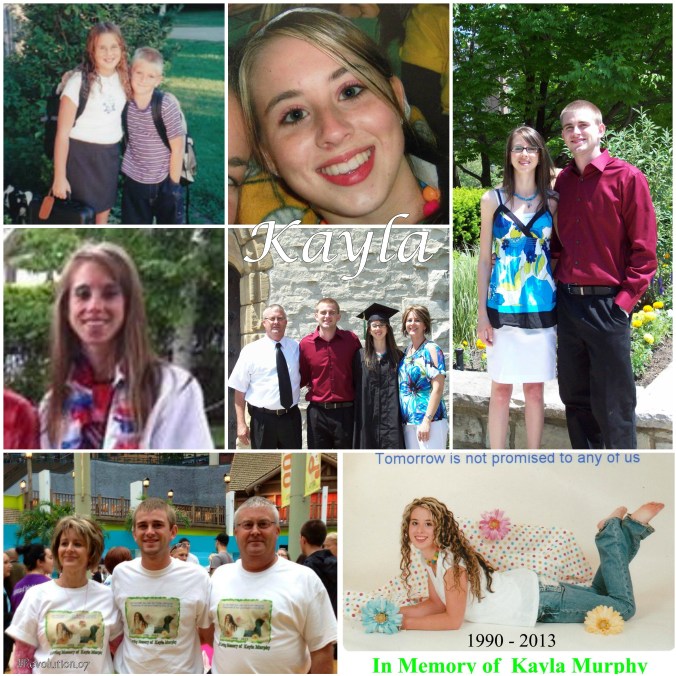
kayla-collage

For anyone that has ever watched anyone die of any type of a disease, you know how absolutely horrific it can be. To know that something is stronger then them, and even with significant help of modern medicine, they’re unable to fight it off or overcome it. To watch someone try and fight so hard  for something, that in the end can takes their life, is beyond heartbreaking. To know that no matter how hard you try, or the resources you put in front of them, it’s nothing compared to what has overtaken them. A feeling of helplessness overtakes every part of you as watch the disease win.

It is through Mallory and Kayla’s stories that we are given the opportunity to learn from those who have walked this lonely path and bring forth awareness to our own words and actions regarding such matters. Because even though it may be possible that your child won’t directly deal with these diseases, there’s a good possibility that one of their friends may. After all, 1 out of 2 girls between the ages of 11 and 13 consider themselves overweight. By you being educated on these topics, you can have simple conversations with your kids, spouse, students, grandchildren, nieces and nephews – which in turns opens the door for conversation about a friend they may know that is struggling. This conversation plants a new seed that trickles down, making others around you more aware of what they’re saying regarding body image, while also being a support for their peers. You are planting the seed of knowledge, awareness and hope – which is something we need more of in this world. This isn’t something to be feared – for fear only closes the door of safety, leaving adults and children alike to feel even more isolated and alone.

When we choose to break down the barriers of these conversations, we open up room for something bigger, an opportunity to offer support and acceptance to others. I hope you are able to take from all of these entries, a new respect for those who have endured this disease themselves, as well as those who have stood on the other side – forced to watch those they love be overtaken by something, that while they thought they could control, only in turn, began to control them. Here are their stories.

My name is Angie Murphy and I would like to share with you our story of how an eating disorder turned our lives upside down. Anorexia Nervosa by definition is an emotional disorder characterized by an obsessive desire to lose weight by refusing to eat. This crippling disease took the life of our oldest child, Kayla, on July 13, 2013, 18 days before her 23rd birthday. Kayla was everything we could’ve asked for, she slept thru the first night home from the hospital, potty trained at 21 months, and learned to talk at a young age. As Kayla grew up she always appeared confident. She tried basketball, played in band and was even named Miss Kellogg. In doing all these things Kayla began to strive for perfection, which in time, we learned that perfectionism is or can be a starting point of an eating disorder. I remember her doing home work in 9th grade, she would be up all night re-writing things to make sure it was perfect. This perfectionism started to play a roll in her health, she would be up very late every night, not getting enough sleep, not eating properly, and always stressed out. We as parents, nor her teacher understood what was going on. We just thought she was concerned about getting good grades for college and was working way too hard to obtain them.

It was right before Kayla started 10th grade, that she made a comment about wanting to starting eating healthier. This wasn’t something that seemed alarming because we were always on the run and had a tendency to not always eat healthy. By January Kayla had lost a lot of weight, again we attributed it to the stress and anxiety from all her home work. My husband, Marty, said she needed to see a doctor to figure out what was going on. It was at this time the doctor diagnosed Kayla with an eating disorder and that some of her organs were in the beginning stages of organ failure. Our Doctor then referred us to Park Nicollet for admission to treatment. Kayla was so good about cooperating, but too far under the control of the eating disorder that she didn’t really understand how deadly this disease could be. But then again, none of us really did.

As we were going thru this whirl wind of facing the reality that our daughter has an eating disorder, we were so confused. My sister-in-law, Jean, also had an eating disorder (anorexia nervosa and bulimia), being that we didn’t live near her, we were never educated on the mental illness. Like so many others, we didn’t understand why she just couldn’t eat.  Kayla and our son seen how the eating disorder would cause someone to act in such a self destructive manner. But because we were not educated on the mental illness none of us understood why it couldn’t be fixed. We didn’t understand the signs that had built up to  the point of where Jean was at. This really goes to show you how naive we were to this mental illness. Eating disorders were something people didn’t talk about. That’s why it is so important to talk about them – to stop the stigma and to educate everyone on the early signs.

When Kayla was admitted to Park Nicollet in the Twin Cities we were so scared. She was there for several weeks, but bound and determined to beat it! After inpatient and weeks of driving daily 180 miles round trip to the Twin Cities so she could do outpatient treatment, she had almost restored her weight and learned coping skills on how to fight off what is referred too as the eating disorders “voices”.

Between 10 and 12th grade Kayla worked with several psychologists, some helpful more helpful then others, but during this period home life was horrible. Between the four of us, I felt like I had to always be there to make everyone’s life better. My husband and son wanted to help, but that usually ended up in arguments. Being so naïve to the disease, we really didn’t know how best to help Kayla at home. Eating disorders are so difficult. Sometimes when you try to encourage them, you are actually feeding the disorder. The tension at home was an everyday occurrence. We are a very close family but there were days I didn’t know if we could continue to live together. Our son didn’t really say a lot, he watched, but I know it was very painful to see his sister go through this. Fighting this disease takes everything out of them and you

Kayla was in and out of treatment several times over the four years she was in college. The most frustrating thing was when she turned 18 and legally became an adult. The doctors no longer had to tell us anything and Kayla could discharge herself from treatment when  she wanted. She wanted to get better so bad but the voices were so strong that it was hard for her to always make decisions that were most beneficial for her overall health and well being.

There are only a few treatment centers in Minnesota and Wisconsin that work specifically with eating disorders. The problem at that time, was they were so inconsistent on treatment methods. Many would get the patient to a stable point and then release them to go home. There wasn’t much guidance on helping the patient and family find a qualified psychologist or psychiatrist. They didn’t teach you how to go grocery shopping or how to really cope outside the treatment center. There wasn’t family education centers or meetings like they have now, that help you better understand the disease, or support groups to speak to other families that are going through the same thing, for additional support.

I think my husband was more realistic about Kayla’s passing, he never said it, but always worried about losing her. I was always a little more optimistic. I spoke with Kayla everyday and she was always trying to fight the voices, reminding her to stay strong. We would search for new doctors to help in anyway possible. Because the disease was so strong on top of a genetic link, I didn’t think Kayla would ever really have a full recovery, but I never imaged it would take her at age 22.

We will never have the answers to understand why this happened. After Kayla passed we were amazed by how many people came forward and said if it wasn’t for Kayla and her story they wouldn’t be here today. Kayla was such a caring and giving person. She touched so many lives, and that is our inspiration. Through this whole journey she/we were never ashamed of what we were going through, so we will continue to tell her story and continue to reach out to help others that are also dealing with eating disorders. We will continue to help educate where we can, continue to help raise money for the National Eating Disorders Association and The Emily Program Foundation in the Twin Cities. Kayla lived by many sayings, but two of my favorites were – “be the best you can be today because tomorrow is not promised to any of us” and “we can stand still and watch, or we can stand strong and fight”.

Do you feel there are other driving factors that reinforce eating disorders aside from genetics?

Yes! Eating disorders aren’t the average dinner table conversation. Which is why it is so important to talk about them – to stop the stigma and to educate everyone on the early signs. Eating disorders can show up for a variety of reasons, they aren’t just learned behaviors, it can be genetic, or how they are “wired”. I also believe society plays a big role in these types of diseases. There is a lot of pressure to be beautiful, to be thin, to be smart, and to be successful. This is a lot of pressure for our children at any age and I feel these are also triggers that start the process. Anxiety, depression, OCD and/or feeling as if they can’t measure up or aren’t good enough, can be some of the beginning signs of eating disorders or the onset of mental illness. As they grow and these issues and thought process strengthen, they start to control their life. We start to look for ways to find control in our lives and as a result, our body chemicals used for coping – diminish. This makes it the perfect time for an eating disorder to develop. What starts as having control over something, eventually begins to control you.

This isn’t just something that effects girls either, I do feel young boys are taught that they should have that perfect “10” for a girlfriend. This leads to a lot of bullying to those that don’t fit the bill or measure up to the standards that our society, communities and peers place. It is both genders that have this perception of being “perfect” in all realms. There are continually more boys/men that are being treated for eating disorders as well. We see this when we look at the pressure sports puts on our athletes. Telling them they need to be lighter to wrestle or leaner to run faster. It’s another aspect of their life they feel pressure from and one they may feel they have more control over. This plants a seed that weight is the driving force behind their performance. We, as a society, put attention in places where it’s least effective and needed, planting seeds that grow into something damaging. Which begins building forests of judgement and stigma around important and necessary issues such as these.This may not be something that affects everyone, but with millions suffering from eating disorders it is definitely something to be concerned and talked about.

Have you noticed an increase in education around Eating Disorders since Kayla was in treatment?

Yes, it’s getting there. They are now working on requiring teachers to be more educated on the signs that may lead to early detection of an eating disorder. Early high school age is a common time for eating disorders to develop but there is no age limit. Eating disorders have been diagnosed in children as young as five, but people such as Jean, who passed away from Anorexia Nervosa wasn’t diagnosed until she was in her late 20’s. Again, it starts with the conversation around it, just being more aware of it, asking more questions, and being advocates for each other – within the homes and the schools. We are gaining ground, slowly but surely.

*If you or anyone you know may struggle with a possible eating disorder, please know there is resources and help! Please contact any of the following

NEDA (National Eating Disorders Association) https://www.nationaleatingdisorders.org/find-help-support

The Emily Program at https://www.emilyprogram.com/locations/minnesota

Foundations such as these are vital in our communities to help others struggling with Eating Disorders. Just as we help fund many other research facilities, these programs are equally important and often don’t the attention they deserve, due to lack of awareness. Please consider donating to The Emily Program Foundation at https://app.etapestry.com/onlineforms/TheEmilyProgramFoundation/donate.html

**Please share this important story and topic on social media, for you never know who could benefit!**
Inside Out – E.D. with Mallory

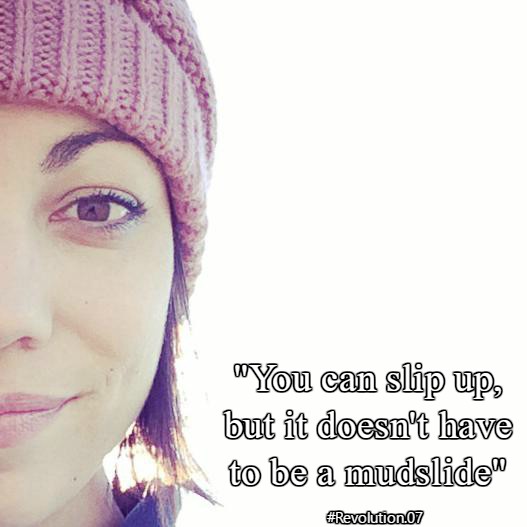
blog-mal-1-pic

 “Why can’t you just eat?” “Why don’t you quit eating?” “Why would anyone want to vomit after every meal? Gross!” “Why can’t you control the thoughts in your head?” “Why can’t you just be happy?” “Why can’t you just calm down?” “Did you see how much weight she’s gained – Ew!” “Put some meat on those bones” “If you were hotter – I’d date you” “God I’m so huge” “I hate my body” “I wish I looked like her” “Why did I have to get my mom’s hips?” “Is it so much to ask to be Beyonce?”

Welcome to the 21st century – where a majority of today’s focus rests on physical appearance. Too fat, too skinny, thighs are too big, ass could be bigger, take some from the gut, put it in the breasts, oh and the extra could be nicely added to the lips, I mean we hate to waste any, God only knows there’s plenty to spare! Welcome to the thought process of a majority of today’s population! If we don’t say them, I can guarantee we think them far more then anyone cares to admit! Whether about others or ourselves, the fact that this much thought goes into one aspect of the millions of things that make up a person – is a problem.

These are the ugly little seeds that are constantly being planted in not only our heads, but our kids’ heads on a daily basis. We stand in a check out line at the grocery store to thumb through the latest magazine with the latest named sexy actress, they watch commercials with half naked men and women, they hear adults talk about how much weight they’ve gained or how they shouldn’t be eating anymore, we hear men laugh and joke about sexist remarks or the ass on the waitress, or the lyrics to songs that reinforce what a “10” should look like.  Adults and children alike are constantly being reminded of the importance we’ve placed on body image – what seems harmless is often more harmful then we believe. We are setting precedence of what is the “norm”, leaving people to think that the only way to ‘fit in’, to be accepted or to be worthy of love – is to mirror these size 2 women, or ripped men. The fact is, that constant conversation, in any manner, around body image, good or bad – is the overall problem. You add these subconscious thoughts to a child who already struggles with things such as depression, anxiety, bi-polar, OCD or just plain fitting in, and you’ve set them up for a psychological disaster that could easily put them into place where control is no longer theirs.

This is a 2 part series on eating disorders, this entry showing what the inside looking out looked like from Mallory’s viewpoint. Angie will tell us what it was like from the outside looking in, watching her daughter endure, and eventually losing her life from Anorexia. This is another issue few care to familiarize themselves with because we often feel it’s nothing we need to worry about with our children. However, I think you, like I was, may be more surprised then you think about the stigma, signs and symptoms that can be associated with these diseases.

My name is Mallory Schad and I am in recovery from an eating disorder. My hope in sharing my story is that I can help shatter the stigma wrapped around mental illnesses. Yes, eating disorders are a mental illness, it’s not something you choose. I believe I was born with this disease. I believe I will always battle this disease, but most of all, I believe I can conquer this disease. Here is my story.

What was your “official diagnosis” and what does that mean via text book – more importantly – what did that mean to you? Has this been something that has always plagued you?

For as long as I can remember, I have struggled with body image. I was a “tomboy” growing up. I wasn’t your typical “girly girl” – I liked hanging with the boys, and dressing like one. My mom was supportive of my taste and always took me shopping in the boy’s department. She never tried to change me, nor told me I needed to look a certain way. So, for the most part, I dressed like a boy. That’s what I liked. Often times in public, I was mistaken as a boy. I felt ashamed of what I looked like, due to others’ reactions and perceptions of me. It was confusing. I was just being me. What is wrong with being me?

It was 7th grade where I finally gained some freedom from outside remarks regarding my gender. I was becoming more interested in make-up and grew my hair long. Funny how people stop ridiculing when you seem to appear “normal” or fit a mold that makes them comfortable. Aside from the harassment I endured from outsiders concerning my gender, there was another factor that I believe played a role in my developing disorder. As a 7th grader, I was a young athlete participating in sports at a higher level. Because of this, I became close with peers and fellow athletes that were older then me on a daily basis. I looked up to them and I felt like they had taken this shy little 7th grader under their wings. I was thankful for them. Exposure goes with the territory of hanging with students older than you. The topics I discussed with my friends in school, were very different from those that I overheard after school during practice. Topics discussed were natural for young girls their age, but for a 12 year old, it was very eye-opening. These girls were going through puberty and experiencing their bodies changing and developing. Naturally, I then became aware of my own body. I remember hearing others talk negatively about the size of their bodies. Comments were made about “being fat” or “having big legs”, etc. I remember a teammate crying at Cross Country practice, telling the coach she “had more weight to carry”, therefore had a harder time keeping up. I knew the weight had nothing to do with her performance. She was not overweight.

I stepped on the scale as a 12 year old and glared at the number I saw staring back at me – 89 pounds. You can’t let yourself get above 89 pounds. I remember feeling scared for having that thought go through my mind. I didn’t know where it came from, so I brushed it aside. I started becoming more aware of my changing body. I was gaining muscle as an athlete and noticed my thighs getting bigger. They touched when I walked. How come the other girl’s thighs don’t touch when they walk? How come my thighs are so HUGE??? “I HATE my thighs”. Fast forward to 9th grade. It was the beginning of Cross Country season. Apparently, I had grown over the summer people felt it was necessary to comment on other people’s bodies, as if it was worthy of discussion. I’ll never forget having 3 people in one day comment on my weight gain. “You look bigger out there running – Strong! Other people had noticed it too. That one stuck with me. I didn’t hear the “strong”, I heard the “bigger”. I went home after practice and paced in the garage. I was filled with rage. “Why was my body anybody else’s concern? I was pissed. I only wished I stayed pissed and didn’t turn that rage inward on myself.

I remained aware of my body through high school. As I entered 11th grade I started developing some disorder behaviors. I purged for the first time when I was 15. It wasn’t then that I fully engaged in this disordered behavior, but I definitely played around with it. During college, I experienced the inevitable “freshman 15”. I was 23 when I started binging and purging. This cycle went on for about 5 months, I’d lose weight and people would notice. They commented. I continued in my cycle of destruction. I saw a psychiatrist because I knew my behavior was unhealthy, but inevitably stopped going. I didn’t think I needed the help. I somewhat snapped out of that cycle of destruction for the time being, only for it to return.

When at your lowest, what did your mental, physical and emotional state consist of? If you could give us a briefing on what went on in your world on an average day, as well inside your head – what would that look like for you.

At the age of 24 I moved to Bemidji, MN for a change of pace. This became the best and worst time of my life simultaneously. In the fall of 2012 I decided I needed to step up my game to get in shape for my cousin’s upcoming destination wedding that February. What started as going to the gym, quickly became being obsessed with the numbers on the exercise machines. Every day I worked out – having to run longer, while increasing resistance and burning more calories. Something HAD to be more intense than the day before.

I was diagnosed with Orthorexia. For those of you wondering, the ‘text book’ version of Orthorexia is an “unhealthy obsession” with otherwise healthy eating, a term which literally means “fixation on righteous eating.”Along with this came the same mindset around food. Everything had to be strictly “the best”. When the various work out regimens weren’t enough, I decided I wanted to get back into running. I ran every day. It was my outlet, or so I thought. Every time I ran, I had to beat the pace from the day before, always having to push myself harder. This sort of mind set is what sent me into a downward spiral. It was “all or nothing” for me. There was no grey. Black and white thinking was my new norm. 

At my lowest weight, I was not living a life for myself anymore. I was living for the disease. There was zero space in my mind for anything other than disordered thoughts. I was consumed. My dietary intake became very rigid. I developed numerous food rules which included constant restrictions, followed by punishing behaviors. Anything else I ate outside of my obsessively strict and rigid guidelines, was done because I was in the company of others, because I felt I needed to hide my odd eating habits. This was my “FIT IS THE NEW SKINNY”. This was my “I’M GETTING HEALTHY” bullshit the media feeds you to believe. But nope, this was something else. This was the diet industries damaging message it sends to the public. Eat this, not that. Do this, to look like this. Looking like this, will make you happy. Wanting to look a certain way, became an unattainable nightmare.

 I was also diagnosed with body dysmorphia. Perhaps for some people they can work out and maintain a rigid diet and truly be healthy and happy. For someone fighting a mental illness, it became insanity.

I became so obsessed with counting calories that I started purging to restrict my caloric intake. I would eat small portions of food, believing them to be large, and then purge afterward. Often times after eating, I would feel such intense guilt and anxiety. Purging became my escape from the anxiety. Sometimes during the day I would go in a cycle of eating and purging for hours. I slept a lot to keep my mind from thinking about food. I wanted to eat all this delicious food that everyone else was having around me, but I couldn’t allow it. It was simply off limits. 

I also developed behaviors called “body checking”. I would measure my wrists and certain parts of my body. I would put certain articles of clothing on to make sure they were still lose, or that they were becoming more lose. I would look for protruding bones in my body, running my hands over them obsessively to make sure I could still feel them. I would take “progress pictures” and compare what I looked like previously to past pictures. I was so fixated on gaining muscle. I couldn’t pass a mirror without looking in it. But the thing was, my mind was playing tricks on me. Of course those bones aren’t protruding anymore and the pants are growing tighter and you look huge in those pictures.” Back to the gym, and you better go to bed hungry”.  The anxiety around that was paralyzing. This cycle was on repeat and this was what day in and day out consisted of for 2 years.

In the end, I did lose the weight. I did gain muscle. Physically, on the outside, I looked “fit”. I received compliments regarding my appearance, which only fueled the fire inside to keep the cycle going. What I wasn’t noticing at the time, was that it was never enough. I could lift a certain amount of weight, run a certain distance at a certain pace, but nothing was ever good enough. There was always room for improvement. This was my high, but also my imprisonment, my punishment. I often times got down on myself for not being a better student in college and partying too much in my early 20’s. I felt like I was turning my life around by achieving this “healthy lifestyle” and that I was making better choices for myself.  I wasn’t healthy though. I was exhausted all the time. My memory was shot. I would blackout often, felt weak and suffered with chest pain due to tears in my esophagus from purging.

Mentally, I felt at complete war with myself. I was not living my life at all. I was living for the disease. I was on a high from “controlling” my dietary intake and working out, but at the same time was severely depressed and didn’t know it.  

What were the general feelings that arose around food in general?

Immense fear. My underlying anxiety just overflowed to food, instead of having anxiety without consumption, I had it with the consumption. If I was consuming something I deemed “safe” I felt empowered. If I was out to eat, or eating something with family or friends that was not my choosing, I felt immense fear and anxiety. I wondered how it was prepared, and what ingredients were involved, which led to panic. I was not shy about sneaking off to purge the food either.

There was also sadness and guilt. I knew what I was doing was unhealthy, but I couldn’t stop because it made me feel so good. When I was eating inside my comfort zone it felt like a high. Everything was a judgement on myself, I obtained self-satisfaction by controlling my urges to eat what was doomed to be “bad for me”.

Grocery shopping took hours. Food was strange for me. Think of it as a drug that you only need a bit of. How do you start or stop when you feel so out of touch with the reality of it? When it controls you?  How do you develop a healthy relationship with it? Food is sort of like drugs in a sense, but also very different – because you need it to survive.

At what point were you aware this had become something beyond your control that needed professional help?

After being told by a doctor I was clinically malnourished, I started seeing a counselor, but she didn’t specialize in in eating disorders. In fact, noone in my area did! In all honesty I figured since I was there, I’d just get some good life counseling and tips to get myself back on track with school since it had taken the back burner to my rigid exercise routine. Besides, I never said I had an eating disorder, I just had “tendencies”.

After about a month, the counselor asked me if I’d consider inpatient. I thought she was crazy – no way! Eventually, she said she couldn’t help me, as she didn’t want to see me walk through the door again continually wasting away.  She quoted me previously saying “I’d give anything to have a healthy relationship with food” and made the analogy that – walking into a grocery store is like shopping for drugs for someone with a drug addiction. It’s insane. She told me it was time to seriously think about treatment. And I did. I called the Emily Program in the Twin Cities on a Friday and was admitted the following Monday.

                    How many times did you attempt help and was it actually helpful?                           If so, what parts did you feel were most detrimental in your journey to healing?

I attempted to seek help a few times, but was never committed. I would lie to counselors and tell them I was better. I wasn’t ready. I didn’t get help until I was completely submersed in my disease.  Eating disorders are really good at telling you that you don’t need help, or that you’re “not sick enough”. Master manipulators they are. It’s tough, because there is so much emphasis surrounding healthy eating and exercise, that it can be hard to tell when you have crossed the line into unhealthy habits.

How long have you been “free” so-to-speak from this disease and who are you since this journey as you continue to heal?

The decision to choose treatment over the comfort of the disorder was the hardest choice I’ve ever had to make. I knew my world would be flipped upside down. I knew it would be hard. I did 4 months of intensive outpatient. 4 days a week I would spend the day at the Emily Program. Re-feeding, dietary classes, group therapy, individual therapy and yoga. I’m not going to lie, the process was painful, but also very liberating learning to disconnect and free myself from it.

My mental state was at an all-time low. I struggled with suicidal ideation, major depressive disorder and anxiety. My body was in immense pain for a few months from the changes it was enduring. Week by week though, I learned about the disease and how to cope. I had no choice but to choose recovery after having my eyes opened to the dangerous lifestyle I had been living.

I’d say it was about 3 months after completing treatment that I became comfortable talking about the disease. I was still very uneasy and untrusting of my body right after treatment. It took some time to take the skills I had learned in treatment and put them to use on my own. I slowly became comfortable with the process and became more open to discussing it.

Today, I want to speak more freely and openly about the disease. I want people to be aware of it and to understand it. It’s so very misunderstood and there can be so many varying layers to it. I want people to know they are not alone, and most importantly that they are not abnormal for having the thoughts/behaviors they do. I want people to know there is help out there and that it’s possible to be freed from this deadly and agonizing disease.

Do you feel this still controls a large part of you, or something you’ve been able to slowly distance yourself from?

I have my good days, bad days, and everything in between. For the most part, my days are good, but there are days I still struggle with my current size and weight. There are times I wish I was smaller, or more fit. But then I remember what I felt like when I was those things. I wasn’t happy. I was sick. I was slowing wasting away in all aspects. Every day takes work. There isn’t a day that goes by that I don’t have to stop myself at some point and revert my thinking. It’s been 2.5 years since treatment.

I still struggle. I’m not where I used to be, but I know it’s going to take time. I’ve come a long way and I feel hopeful that it will only get better. It took a lot of work to get to where I am now.

What do you feel is the biggest driving force behind eating disorders? 

It can be very different for everyone, but often times I think it’s a fight for control mixed with societal beauty standards. But more times then not, eating disorders tend to mask other issues. I know for me, when I was in the depths of the disorder, it wasn’t beauty driven. It was about control, obsession and perfectionism. I had underlying issues that I needed to deal with and focusing on “getting healthy” felt like I was bettering myself.  I was masking.

I think the younger generations are very susceptible to developing eating disorders. There is a lot of pressure to fit in and look a certain way. I also believe that eating disorders do not discriminate. Any person at any age can fall victim to the disease.

How has this changed the course of your life? Is this a topic of conversation you feel deserves more time and light?

I’m not really sure how it’s changed the course of my life. I want to reach out to others and make myself available. My goal is to be a mentor to those struggling and to spread awareness and education. I want to help others along their path as I continue to learn, grow and heal myself.

Eating disorders take more lives than any other mental illness. That’s a staggering statistic, so yes, this disease absolutely deserves more time and light.

If you could speak to this age group- or any girls/women/men either at that turning point in their life-or already suffering, trying to hold on- what would you say?

I would tell them there is more to life than what they are desperately holding on to. That I know how terrifying it is to let go of the comfort the eating disorder provides, but that nothing compares to the freedom that treatment and recovery provide.

Help is out there. Trust in others. Trust in the process. Find a support system and reach out to people. Treatment and recovery is a real ugly bitch. It rips you wide open. You have to take a good look at yourself and question what you want for yourself in this life. I’d tell them it’s tough, but it’s so worth it. Most of all, it might not be your hardest battle in life. Choosing to fight preps you for the rest of whatever life throws at you. You learn about yourself, and you learn how to truly enjoy life.

I would tell them that we are all individuals and that we all have struggles. To look within and figure out what it is that is causing pain – really dig into it. Often times, eating disorders are masking a bigger problem.

*If you or anyone you know may struggle with a possible eating disorder, please know there is resources and help! Please contact any of the following

NEDA (National Eating Disorders Association) https://www.nationaleatingdisorders.org/find-help-support

The Emily Program at https://www.emilyprogram.com/locations/minnesota

Foundations such as these are vital in our communities to help others struggling with Eating Disorders. Just as we help fund many other research facilities, these programs are equally important and often don’t the attention they deserve, due to lack of awareness. Please consider donating to The Emily Program Foundation at https://app.etapestry.com/onlineforms/TheEmilyProgramFoundation/donate.html

**Please share this important story and topic on social media, for you never know who could benefit!**