2019 The Year of Trust

snapchat-554549456.jpg

I walked into 2019 with my “Word of the Year” being trust. I knew I needed to learn to trust in the process, trust in my discernment of others, while also trusting in something larger then myself.
As with the beginning of every year, I went into it with enthusiasm and excitement, finding myself being conscious of things happening around me, and saying yes to new opportunities with complete trust that all will work out as it should. As the year progressed, that excitement faded and I found myself getting lost in the daily chaos and giving into things I knew felt off, ignoring the fact that trust was what I needed to be focusing on.
As the year came to a close, trust began making itself apparent again as many things were happening around me in which I was feeding fear more then trust, far more fearful of the outcome, with less faith in the lesson. With reflection, I realized the biggest lesson that was being taught, was the most important, and that was to trust myself, my decisions, and my internal guidance system.

Thank you 2019, trust, and all with whom I’ve crossed paths with, you have taught me so much about the world at large, those surrounding me, and most importantly, myself.

The Year of Trust has taught me….

That behind every face is a story, and each story has a multitude of chapters.
That chapters are often more complicated than they may appear, and with them comes a lot of layers and depth.
That the lyrics of a song can put our emotions into words for us, and there’s always another one to be written, striking a new chord.
That humility looks alot like getting knocked down, and resilience looks alot like continually standing back up.
That you can feel utter and complete loneliness being in the midst of many, and connection can feel safe amongst the company of few.
That the masks we wear are just wounds waiting to be bandaged and healed, but you can’t bandage something without first acknowledging it needs attention.
That just because every ocean makes waves, doesn’t mean it didn’t start with a ripple.
That while all of the human emotions are important in serving a purpose, belly laughter is an absolute necessity in daily life in order to keep your sanity and wits about you.
That every outward judgement of another, originated with our own internal critical voice towards ourselves.
That every problem has a solution, assuming you’re willing to find it, with acceptance that it may be different than you had originally envisioned.
That oftentimes relationships look less like fairytale endings, and more like hard working, beautiful chaos.
That trust requires a level of being comfortable with not knowing, and not knowing demands a lot of letting go.
That the behind-the-scenes is often different then what’s playing on the stage. And the mistakes are your opportunity to improve moving forward.
That the days of dress rehearsal are nearing an end, and showing up and moving forward is about to become mandatory for all.
That while strength is an attribute to aspire too, it requires weakness to obtain, and with weakness comes vulnerability.
That the idea of responsibility is more than just paying the bills, and holding a job. It is observing your thoughts, emotions and behavior and most importantly, owning and changing them when necessary.
That everyone’s lens and perception of the world is so very different. And the only way to understand the complex layers, is to take the time and willingness to explore them.
That support looks different for everyone, and sometimes you have to ask…both for it, as well as how to be it.
That often times imprisonment is generated by that of the human mind, and obtaining freedom, looks a lot like self reflection, hard work and discipline. However, the benefits always outweigh the drawbacks.
That our outside world often represents the state of our inside world. You will see both order and chaos cycling.

That it’s easier to swim down river then it is up, and when we’re going upstream, we’re in resistance to what is in front of us.
That in order to evolve, we must be willing to enter new territory and that anyone has the capacity to do so, given they are open and ready to try.
That over your lifetime the compilation of small things will always be the big things, and authentic support and encouragement are something the world at large is in desperate need of.
That there is no escaping balance. Everything and everyone has light and dark, positive and negative, yin and yang. You can’t have one without the other and you have to be OK with both sides of the coin.
That life is a dance, it requires stumbling, sidestepping, backward and forward motion from beginning to end.
That truly moving forward often requires forgiveness. And forgiveness of self is the hardest apology to accept.
That it’s important to remember that life can always be worse, there is a lot to be grateful for, attempt to see even the worst days through a lens of gratitude.
However, it’s also OK to acknowledge that a struggle is a struggle, and pretending the armour isn’t heavy, only makes the weight feel more unbearable.
That faith looks different to everyone, maybe it’s less about the details and more about the importance of simply believing in something larger than ourselves.
That we need to get back to the basics in life, there’s beauty in choosing to simplify instead of complicate.
That every sunset is followed by a sunrise, even if it takes awhile to see the light.
That we’re all just doing our best, even on days it feels like anything but.
That with each passing second, minute and hour, follows another, day, week, month and year. And with those comes the opportunity of a clean slate, waiting for us to create a new story, write new chapters and sing new lyrics.
As we enter not only into a new year, but a new decade, the phrase that resonates is ‘letting go’. Letting go of linear and small minded thinking, of toxicity in its various forms. Letting go of control, the need to be right, self hate, self doubt and self judgement and learning to silence that nasty little, but loud and critical voice within. Letting go of unresolved internal chaos, and people that aren’t encouraging growth and evolution; both in themselves and others. Letting go of pent up emotion and unspoken words, both positively and negatively charged. Letting go of the need to please everyone around me in order to feel validated, while also letting go of the constant need to resist and rebel, they say there’s a sweet balance between the two…I’ll let you know when I figure it out 😉
As with everything there is a counterpart, with releasing comes embracing. I look forward to embracing new opportunities, people and places. Embracing more authentic conversations amongst a plethora of people, continually learning and adapting, being open to whatever is put before me, knowing it is for my evolution. Embracing uncertainty through the lessons, while remembering that I too, am only human….for as easy as it is to allow the words to flow through my fingertips, it doesn’t come without the realization and harsh reality that putting it all into action is the hardest part.
May you let go while embracing as we enter into this exciting new time. Thank you all for your love and support in the many ways in which you have provided it, Happy 2020!

*If this resonates, please feel free to share!**

**Change is hard, if you’re looking for additional support, book a complimentary call at http://www.crisisaverted.org **

Fork In The Road

There are times in your life where you’ll be standing at a fork in the road, and not even realize how detrimental this one decision can be. How vast a contrast one decision from another really is. Or how it will alter your entire life. This was me when I decided to leave Germany to follow the love of my life to the States. This was the difference between expansion and stagnation. This wasn’t just a turning point, it was the turning point.

This is Michael Heppner; Husband, father, German Teacher, and Boys Soccer Coach, but his story holds so much value beneath that. I respect his ability to self reflect, and not only observe past faults and take ownership but also a willingness to correct them, is something we can all learn from. Thank you for taking the time to share the parts of you that make you who you are today.

Can you think of a time you were untrue to yourself?

Honestly, I spent from the day I was born, to 19 years old, always trying to be something or someone that I wasn’t. I came from an environment that reinforced that the external mattered more than the internal. This was a part of an era that many can relate to, perhaps you could say a generational way of thinking. These outside markers were of utmost importance…the win, the grade, the success…always measuring.

My brother was held to a very high standard, there were expectations to be a teacher and do big things in life. He was very intelligent and met the standards given, however, this wasn’t the same for me. There were predetermined opinions and expectations of me as well, most of which I felt were negative. Instead of proving them wrong by showing them who I truly was, I behaved in a way that actually solidified that opinion of me. My father would tell me, ‘Michael, you are not very bright, but you are a hard worker. Get a job in construction, or drive truck.’ Even though I was intelligent, I chose not to show it. Instead, I chose to drink, smoke and make poor decisions. With poor decisions, came poor grades and consequences. It wasn’t until later that I realized that wasn’t a life I had to live, and there were other options and avenues to pursue.

What was a major crossroad in your life?

Growing up, my mom was a butcher and my dad a Lieutenant Colonel in the German Military, so my home life was very structured and controlled. My mom made every meal, did my laundry, and cleaned, so much so, that I still find myself falling back into old habits when I enter their home. There’s very little of my daily routine that wasn’t calculated. Upon graduation, I entered the military, as this is a one-year minimum requirement for citizens in Germany. This included living in the barracks during the week and returning home on the weekends. I had become so used to being at home, with comfort and structure, that I would cry on Sundays, knowing I had to leave again. The plan after Basic Training was to be a cook in the Military and live at home.

It’s 1998, and I’m in my prime. I’m 21 years old when I attend our town festival ‘Karneval’. The “cool” thing at the time was to have “business cards” made with your address and the school you’re attending. My buddy made me some that had just come in that day. Before leaving that night, I gave my card to this girl. I didn’t think I’d hear from her, but a few weeks later, I got a letter in the mail. She was nannying for a family an hour from my parents. From then on out, we spent as much time together as we could before she had to leave for the States. This was my first glimpse into the possibility of life outside of the mundane routine I’d become accustomed to. That day, the festival, the business card, the timing – HER. It changed everything, forever. She later became my wife and a catalyst for the life I wanted to live.

How was the transition to the US? If you could sum up America in a phrase, what would it be?

My parents were not only devastated when I left but again when I become an official American citizen. When I got US citizenship, my mom said: “Mike, it’s like we’re losing you all over again.” It’s difficult to take on a new culture, especially when you’re so shielded from the world. Alot of things were regulated, there’s no fishing or hunting, and you also don’t have school sports. They’re separate from each other. You can’t even have a bonfire in your backyard. When you have 82 million people living in a space the size of Montana, living gets tight, you don’t have yards and some basic freedom that we’re used too here..

My one phrase to sum up America, in my opinion, is “From the dishwasher to the millionaire, America is great!”

What is the biggest mistake or failure, that has also been your greatest teacher?

My dad was my badminton coach and I was very involved with soccer. Never was I asked how the game was, or if I had fun, only if we won. If we lost, it was on me/us to continually do better and more. Winning became not only a measurement of success but also a measurement of self-worth. You won, no matter the cost. Period. That mentality carried over into my coaching when I started coaching Girls Soccer. I didn’t realize the capacity in which my actions were hurting others. I would scream on the sidelines, outraged at mistakes and losses. At a certain point, my wife quit coming to the games because of my behavior. But I didn’t care, and I didn’t know better. The win was everything, it was the only measuring tool.

A couple of years into coaching, it was mandated that we attend a conference called “Why We Play”. Apprehensive and annoyed at the thought of wasting a summer day in a conference instead of fishing, I went. There was one phrase that struck me, “You don’t work at, or win a sport, you play a sport”. This changed the way I coached from that day forward. It took a lot of introspection, and self-examination of my behaviors and my belief systems behind what sports are. I want the players to learn and grow from opportunities, not to teach through dictating from a fear-driven perspective. Instead of being a measurement of self-worth, I want them to reflect on if they put their best effort forth. I want them to know we can have personal wins, without winning the game.

I destroyed a lot of relationships with athletes and ruined their love for sports. To this day, I deeply regret those wrongs. I have learned that the most important part of teaching and coaching, is the positive impact you can have on anyone, despite their performance. There is an opportunity for growth through every “failure”. Now, I coach from the sidelines, I don’t pull a player out for every mistake or ridicule them in front of their teammates. I know they are doing the best they can at the time, and my job is to allow them to learn in a safe environment. My passion for both coaching and teaching has changed from winning to connection and support.

What is something most wouldn’t know about you?

I was a vegetarian for most of my childhood. For the longest time, I only ate bread and chocolate milk. When your mother is a butcher, this is an insult. When you don’t have a lot of control in your life, you focus on the things you can control. For me, it was what I ate. My parents took me to Psychologists to better understand what was “wrong” with me but were not successful. I didn’t know how to verbalize it at the time, but I would say it was my way of being defiant, feeling as if I had a say in one area of my life.

What is your greatest accomplishment(s)?

I would be lying if I said a primary drive behind obtaining my teaching degree, was just others’ opinions of me. The idea of the degree seemed too high of an expectation, but a challenge I was up for, largely in part of the encouragement from my wife. Although history intrigues me, I thought I could add another dynamic to teaching German by being able to share the culture from a personal perspective. Earning this degree was a huge milestone, it represents so many things to me. I am grateful to be able to teach youth, and I hope in ways that extend beyond the mandated curriculum.

Who is the most influential person in your life?

Hands down, without a doubt, my wife, Debbie. Without her, there’s a lot of things I wouldn’t be, she’s all of my reasons.

Overall, when I see things being done that I don’t agree with, or poor role models, I just try and take note of that, and do the opposite, to the best of my abilities.

**We can all learn from others’ stories! Feel free to share if this resonates with you!**

**If you’re at a ‘fork in the road’ in your life and would like additional support, book a complimentary call at www.crisisaverted.org **

Just Today

Brighton Collage 4-2019

My mom had me at the age of 50, she thought she was going through menopause and went to the doctor, only to find out she was pregnant…with number 6 of the bunch. She cried the whole way home, and then I came along!

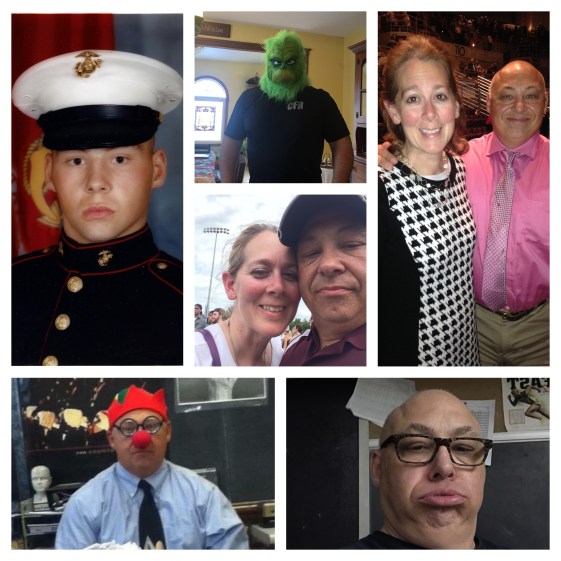
Welcome to the life of Bryan Brighton, a PEM High School English teacher, husband, and father of 3. Little did I know in the 10th grade, that this man, would be one of the primary reasons behind my love to write. It was not hard to enjoy his class and his enthusiasm for it. From jumping on desks to explain that there is in fact, no difference between 1 exclamation mark and 5 (who knew?), to reading “To Kill a Mockingbird”, there was a comedic seriousness when entering his room. A second descendant from England immigrants, and a man with great stories and insight, I hope you enjoy!

What was your biggest struggle in High School?

My dad passed away at the age of 59 from a heart attack. I was 13 years old. After that, I had this overwhelming fear of abandonment. I never wanted to be left behind or miss out. If my friends were meeting at 7 pm, I would show up at 6:30 just to make sure they didn’t leave without me. And it wasn’t just with particular people, it was with anyone. Being left behind wasn’t an option.

What has been the biggest life changing event for you? In what ways has it changed the way you live your life?

Going to the doctor at my lowest point, forever changed my life, as well as the ways in which I was thinking and living. After my mom passed, my depression intensified. Alot. Walking into that office came with it this instantaneous moment of release and relief. I just sat and cried, and talked. It literally saved my life. By making this decision, it opened up an entire new conversation surrounding mental health about our family history that I was unaware of.

It was amazing what surfaced once the dialogue began. I reached out to my siblings and just told them what was going on, and suggested that if they had any of these symptoms, they were worth getting checked out. Through talking, we realized there were similarities amongst us that we’ve shared and it’s also created dialogue with our children.

Another life changer, was after getting a medication change. I had maxed out on my current med, and needed to up my dose, which consisted of bringing in another medication, Wellbutrin. This was the first time in my life that the thought process of ‘if I don’t wake up tomorrow, it will be ok’, stopped. For as long as I can remember, I had this thought process daily. When at my lowest, it worsened. Even while on Celexa, I would still have these thoughts. I didn’t even realize how content I was thinking this, or that it wasn’t normal to think.

What was depression for you?

You’ll hear people say ‘those were the dark years’, but you never really understand what they mean. Until you look back at old pictures and see yourself, as if there’s this invisible weight you were carrying, and you think, oh, yep, now I get it. Those were my ‘dark years.’

Depression for me, was total and complete exhaustion, while also not sleeping at night. I’ve always struggled with not sleeping, another thing I just thought was normal. When overly tired, depression rages on my internal monologue. It will ramp up and escalate quickly. What may begin as ‘don’t forget to buy bread’, can quickly become repetitive, followed by screaming in my head, drowning out other thoughts.

My career was always the divider though. Whether in the Marines or teaching, when I entered that zone of structure, I was in my element. I knew what was coming, how to perform and was still able to be my goofy self. No one in that environment would have guessed I was struggling. But once I hit my front door, the only thing I wanted was my bed. It is exhausting to be so exhausted. My family didn’t get the best of me, instead, they got too tired, cranky me, and that wasn’t fair.

Depression for me, was flirting with the idea of yanking the steering wheel just enough to the left as a semi was approaching in oncoming traffic to end it all, more often than I care to admit.

What’s the biggest lie you’ve been told?

Before I got married, everyone always told me to enjoy being single while I could, because once you get married, it’s going to be hard work. Everyone said it takes so much to make the relationship work and stay together. I’ve been married for 25 years, and it’s the easiest thing I’ve done, and it’s been anything but work. Of course, there are things we don’t agree on, and we have to talk through it, but I don’t know that we’ve ever yelled at each other, or even hit a point of such intensity.

People will tell you ‘never quit, never give up’. And that is true in certain things. I do believe that if you start a season, project or make a commitment, you should finish it. But I also believe there are certain points in life, where you have to be okay with letting something, or someone, go.

The career tests are liars. They will tell you, if you take this test, we’ll be able to tell you what you’ll be when you grow up. I was supposed to be a Forest Ranger. So…yeah….gotta go with a lie on that one.

What comes to mind when you think about the most difficult choice, or thing you’ve had to do in your life?

Hanging in there when the only reason not to is disappointing others. Prior to getting help there were so many deep holes and so many easy ways out. You’re so tired …. all the time and just getting up every morning is like …ugghhhh. When you have little kids, a spouse, Moms and all these people that you couldn’t bear the thought of putting through the sadness, the questions, the years and lifetimes of wondering ‘what if you just keep on keeping on’? You always remember, I just have to do it today.

Feel free to share, if this story resonates with you!

Despite where we’re at in life, we can all use additional support. Let’s connect! For a complimentary phone call, visit http://www.crisisaverted.org to schedule!

The Beginning

Jos sr pic hammock

Jos sr pic bench


She is the face behind the face of the company, Crisis Averted. The real story. The reason it launched and exists. Most companies begin with credentials that include a 4-year bachelors degree with a major and a minor in specific fields of study. I’m often asked if I have a Psychology degree, if I’m a licensed counselor or if I’m paid by the public school systems. The answer is “no” to all. Which usually follows by a puzzled look of what exactly Life Coaching is or what these public speaking engagements could possibly include!

This companies credentials begin with the face in the picture. Her name is Josie. It began with a death by suicide. Then a phone call. The one that changes everything. The one where you realize never again would you be who you once were. It began with the cold hard truth of what that really looks like and how absolutely terrible it is to feel so helpless, not being able to save another human being from the depths of their own hell. Even worse, was not knowing it was anywhere near that bad. It followed with unending guilt, depression and sadness that words can’t describe. The heaviness of her pain was instantaneously transferred to those left behind.

Then, it was being forced to walk the same path she did. One I simply could never understand prior. It was being buried in a pillow that I never wanted to leave. Followed by the bottle. The bottle of booze, the bottle of meds, (never ending medications to “fix” me), a pack of marlboros and even more external toxicity at every corner. After learning how to overcome those, it was learning to feel again without constant numbing. And I am not going to lie when I say that was more painful then any hang over! From there was acceptance. Which, on days like today, can feel light years away. Then there was forgiveness of self. Shit, that one my friends, is the toughest mountain to climb!

11 years ago, I wouldn’t have guessed this is what would’ve stemmed from something so atrocious. There was this silent pull to keep moving, even in the depths of chaos. Blindly putting one foot in front of the other. Stumbling backwards, falling, getting back up. Doors slammed shut, while others opened. This company, this mission, me, as a person – stems from her, her life and even more so, her death and the lessons that followed. They are my credentials, they are more then any text book or shiny degree could offer. Its debt comes with one that no number can justify. It began with the worst outcome imaginable and has turned into what I can only hope, will be the best thing possible. I can’t save her, perhaps she was never ours to save. I can’t go back and redo one single second of it. But I can change it from here on out.

You see, it isn’t about mental illness, it’s about mental health. It isn’t about fixing, it’s about growing. It isn’t about numbing, it’s about feeling. It isn’t about resistance, it’s about acceptance. It isn’t about them, it’s about us. It isn’t about external blame, it’s about internal peace. It’s about learning all of these, and then continually relearning them over and over again. It’s about what we’re here for. The life we want to live, one with passion, purpose and fulfillment. And most of all, it’s about healing.

http://www.crisisaverted.org

You aren’t alone and your story isn’t for nothing.

Jos and I senior pic

Jos & I country fest 06

Our Youth

Customized Class 1

After listening to hundreds of students feedback ranging from Jr. to Sr. High, I can’t help but wonder if I would know my own child’s response if it were in front of me. In fact, I wonder if most parents would know their know their child’s response. We’re so good as parents, teachers and adults of just assuming we know best. We assume that because we like something, our kids will too. We assume they don’t see parts of us we don’t want them to see. We assume they don’t pick up on the silence, on the tone, or the expectations we place before them. We assume that because our experiences have been a certain way, theirs must be the same. And that’s assuming that any would engage in these deeper levels of conversation, with true honesty. I’m guilty of all of the above.

How many times do we, as parents allow our kids the platform to speak outside of “how was your day?” How many times do we take time to consciously engage in deeper conversations, on a more regular basis. How often do we self reflect on where things within our homes may need attention before pointing the blame on our kids or teachers? After all, our kids are simply repeating most of our own behaviors. Are we taking the time to really listen? I know I’m good for wanting to just fix it, or make it go away, instead of letting them feel and learn that feeling is part of it, even the not so pretty stuff. I want to make it all better instead of allowing them to speak for themselves and have a voice. Also guilty on all charges.

Are we aware of the apps that are on their devices, the messages or snaps being sent? Would we realize if they were self harming? Would we have any clue that the reason they’re acting out may have more to do with what’s happening on a device, at school or at home, then perhaps even the current situation? Would we know if they were hurting to the extent they’ve considered ending their lives? Sounds intense, right? Well, I invite you to get a glimpse into their lives, because I can promise you, it can be far different then they sometimes lead on, and these are plenty of our own children answering with these responses. Now that we’ve heard from parents and teachers, please, take the time to read, to listen and to engage in these deeper conversations in your homes. They’re so desperately needed. They have voices, not only do they need to be heard, but they deserve to be heard, for they’re powerful.

*Please note: The intention of this entry isn’t to shame anyone, it’s simply to bring awareness to our blind spots as adults, as we all have them, especially when it comes to our own children. It’s simply to bring awareness to today’s youth, they way they may be feeling and opening up a different dynamic of conversation at the dinner table.**

What do you feel is the biggest struggle being in SCHOOL?

“Keeping good grades and trying to be at your best 100% of the time”.

“Being able to balance sports, homework and relationships”.

“Feeling like I have to take on everything and make it perfect for my parents and friends to accept me.”

“Always trying to fit in, I never know what music I should listen to, sports I should play or things I should like, just to get people to like me”

“Always worried about my next test or what my grade will be and if I’ll get into college.”

“Constantly being told and reminded I’m not good enough”

“Trying not to get caught up in judgement. That’s all high school is, is constantly feeling judged by other students, friends and teachers”.

“Expected to stay focused all day everyday, at school and at home”.

“Feeling like teachers act like the students, trying to be cool or favoring or judging. Not having that safe place at school.”

“If I’m not in sports, I don’t belong”

“It can feel like a war zone some days, always trying to fit in and avoid being judged, it can be really tiring”

What is your biggest struggle at HOME?

“I am on my phone alot at home, most of us are. We used to eat together and do more things together, now I’m just always in my room on my device.”

“My parents fighting over who is more right or who is the better parent”

“Switching houses constantly. I feel like once I finally get settled into one house, I go to the next.”

“Always feeling like I need to be studying or on the court – it’s never enough.”

“My mom/dad struggle with anxiety and depression, it’s hard not to be sad when they’re sad or not get caught up in their emotional struggles.”

“Trying to make my parents happy”

“Having parents that don’t fight”

“Time management”

“My mom struggles with anxiety. It’s hard to watch and it makes me have anxiety when she’s having an attack.”

“Addiction. My dad drinks alot, it makes it really hard on my siblings and I, we just try to avoid him so he doesn’t get mad.”

“Watching my sister have really bad depression and has to leave the home to get help so she stops hurting herself.”

“My brother had a really bad last year, it was so hard on my family, I think it’s better now though. I hope so.”

“Listening to my parents talk smack about each other and to each other about who is the worst parent.”

How can those around you better SUPPORT you?

“Just listen”

“Don’t try and fix me all the time”

“Stop trying to make me be perfect”

“Just pay attention to me and what I’m saying and don’t yell when I do talk”

“Ask me more questions and check in on me from time to time”

“Let me be imperfect”

“Let me be me, I’m not you.”


Resume of Life

Blog Resume of Life

As I began the fun filled process of drafting a cover letter and resume for a possible job prospect, I realize the difficulty in writing, trying to “sell” myself, while trying to dissect parts of me that are most suiting for this position. Instead, I end up writing a different type cover letter and resume, with 3 things running in my mind:

– If I had to sum my life up in 3-5 paragraphs, what would it be?

– Why aren’t more important questions asked and addressed during these processes, you can learn so much more about a person from their personal triumphs and failures then you can asking repetitive, surface questions.

– If you could give yourself advice, followed by the lesson of that decade, what would it be?

Welcome to my resume of life….I highly recommend everyone attempt writing their own, it’s amazing to see your life on paper, the triumphs and tribulations – all meshed together through the decades, forming pieces of you as you went, without even realizing it!

To The Director of My Career:

Due to the fact I didn’t fit well with the average student in the classroom or athletically in High School, I made myself known through rebellion instead. Even though my friends were members of the Honor Society and lettered in athletics, I had a knack for throwing a killer party, while also being the life of the party. Literally, life was one big party to me, whether under the influence or not, I lettered in communication!

Advice: you are more then what you’re made to feel by those around you and even more so, the stories you tell yourself to fit in. Don’t listen, nor cling to the negativity and insecurity – they are simply bad stories you tell yourself to mask the parts of you that feel as if she doesn’t fit in, in ways she’s “supposed” too.

Lesson – even the best party planner is not exempt from consequences and the realization that substances can only mask so much for so long. Know when you’re clinging to something too tightly, be it a person, place, thing, status or behavior – it doesn’t define you – I promise. Let it go, grieve it if you need too – but be ready for something better.

I entered my 20’s with the birth of my daughter, also known as my saving grace and the one amazing thing from this decade. For as scared as I was to be a mom, it became home immediately. The age of 23 marked what became the decade of trauma – or the 3 D’s – death, divorce and depression. This era included periods of wanting to tap out of life, more then stay in it. I was driven primarily by guilt, regret and anger, which were the few driving motivating emotions through the depression. I was reliant on needing to be “fixed” especially in the head, with that fixing came large doses of medication, then the need for more fixing with health ailments from their side effects. This became a new crutch, on top of the others that I whole-heartedly relied on. While trying to stay afloat and navigate my way through the fog, I don’t realize all of the things I’m learning about myself as I go.

Advice: Hold on – tight. These are the years of the most expansive self growth but hands down the most painful.

Lesson: You are the healer of you – keep going. You are an ocean – full of layers upon layers of traumas and triumphs, and every emotion in between. Even the ocean resurfaces some of it’s deepest buried treasures and skeletons. No one is exempt. You will always come home to you, there’s only so much hate, blame and anger you can extend outwards without realizing you are the only person that you will always have to face in the mirror.

My 30’s have been a breath of fresh air considering – like a phoenix rising from the ashes, I can finally see the light for more then a second in the drowning seas. Although the seas still manage to knock me around from time to time, swallowing me in the grief, heartache, guilt and shame – they’re reminding me I’m still human and what I have left to work on and heal. This is the decade where things have come to light again and again – an awakening of awareness. Just when I think I’m done working through something – it resurfaces in a new light – reminding me the work is always there, but so damn refreshing and liberating to push through once I’m able to see the view from the other side. Feels good to slowly but surely be free from the chains that have bound me through each era. Breaking away one at a time.

Advice: call it the new era of “mid-life crisis” if you may, but take it as an amazing opportunity to see life through a new lens. Even if it has to start over now, you’re still young enough to embrace it and start anew, while wise enough to have the past 2 decades’ knowledge to do it differently. 😉

Lesson: we’re all constantly learning, but learning to not think and act from a place of self hate has been the hardest to overcome. Its where you need to learn to be nicer to yourself, while breaking ideas around “right, wrong, good and bad” and do what feels right for you, giving yourself room to falter without judgement. We all have shadow sides, quit focusing and hating those parts so much, and accept it for what it is. You aren’t every skeleton. Continue to move along – it’s only going to get better.

Resume:

Teens (1999-2002)

  • Amazing communicator (first comment at every conference since Kindergarten!)
  • Plans great parties
  • Always smiling and laughing
  • Rebellion to fit in and stand out at the same time
  • Prefers nothing except English and Psychology

Twenties (2004-2014)

  • Learned the definition of being a mother
  • Traded in being a rebel for people pleasing
  • More concerned with fitting in and being a “good” mom/person and outside perception of me
  • Trial and error career, all customer service based
  • Survivor of suicide, divorce, depression, high cholesterol, high blood pressure, and being dangerously over medicated
  • Drowned in depression, guilt, shame, self-hate, self-loathing, vodka, marlboros and toxicity (it became my new norm and home)
  • Learned living instead of dying
  • Still an amazing communicator – just wanna talk about the deep stuff

Thirties (2014-current) * All still a work in progress 😉

  • Learned what healing what the inside out meant
  • Advocate for a new paradigm around mental health
  • Jack of all trades, master of few, and ok with that
  • Learning to embrace the shadow side of myself
  • Learner of forgiveness in every sense of the word, while continually being forced back to the drawing board to reexamine it every time it reappears.
  • Overcomer of anger, guilt and shame
  • Sees the world through the eyes of an Aquarian, a dreamer of the bigger picture
  • Embracer of all that is right and just on a humanitarian level
  • Awakened to the ways of the world, behavior, emotion and trauma
  • Believe there is always a core far beneath the surface of the current issue, and a ripple that expands from it
  • Did I say an amazing communicator? 😉

Education

  • Completion of the amazing ACTV8 program http://actv8.vanessafeils.com/
  • Currently still enrolled in life lessons of forgiveness of self
  • Learning mental illness doesn’t mean broken with a fixed sign on it – only room for growth and expansion of self awareness

**If you could sum up your life resume with a word or sentence for each decade, what would it be? Any advice or major lessons learned from each?**

*If this resonates, feel free to share on social media!*

Your Story

Blog - StoriesNovember 14th, 2007 marks the “9-11” of my world. A date that became a dreaded day in my history book, one that shook me to my core, a depth I didn’t know was possible. This day not only marked the death of my sister, but the death of me as the person I had become thus far in life. As the years have unfolded I’ve realized how many times I’ve died, how many old layers and stories I’ve shed. But as with any death, both physical and metaphorical – comes birth. It’s funny how much we don’t realize or focus on that. With every loss of a person, relationship, home or possession comes new opportunity – assuming we’re willing to see it. We spend so much time looking back at that closed door trying to figure out how we could’ve left it open, that we blind ourselves from seeing the beauty that lies ahead.

There are times I’ve wondered – had she not died, would I have still found my passion? Would I be transitioning out of the corporate world to focus on revolutionizing and bringing awareness to a new paradigm around mental and emotional health? Would I have learned the same valuable lessons personally so I could connect and teach others? Would I have realized that it has little to do with labels and more to do with the underlying components, the ones we’ve all suppressed and forced ourselves to bury and forget? Lets be honest, I’ve always been good at expanding and pushing the limits, but would I have done it in a way that caused more pain and disruption, instead of healing and liberation? Would I have started a blog? One that began with my own story and  shifted into the love of telling others real and raw stories? Ones not only of trauma and heartache, but of love and healing? Perhaps we’re all still going where we were originally headed, but her decision, one that left a ripple – shifted my course to this path. A path that has pushed me to the depths of some very dark valleys, and pushed me even harder up the mountains. I don’t want this to be my only story – her death was the start of my story, and one I hope overflows to many others stories. Your greatest strengths really do lie in your deepest pain. Those are the very wounds that are there for a reason you have yet to discover, the ones that will not only break you down – but to break you open. Those are the turning points in your life that are pushing to you to new depths. It isn’t about allowing this to be your only story, it’s about pushing yourself to a new one. It isn’t about going with the norm, it’s about reinventing the norm. And it isn’t about her death as much as it is the life that can be birthed from it. The realization that in a world that often feels hopeless, there is still plenty of it. And that starts with us – that starts with the death of old stories and the pain we’ve held so tightly too, and allowing ourselves to rise from it. Its about being true to ourselves, instead of attaching ourselves to others. This blog began with telling my own story, but has blossomed into the realization that we all have one to tell. It has made me realize it isn’t things or surface conversations that connect us, its real life pain and emotion that help us realize, we aren’t that different from each other. To realize we all have something to offer, because noone has the same story, with the same perspective and emotion as yours has held.

So I leave you with this – if you had to think of all the stories you had to tell, what one do you want people to know? Will you tell the one people see from the outside just to please their pallet? Or will you tell them the one that sits deep in your soul? Will you show up in the world in the way it wants you too, or will you show up in a way that offers a deeper truth? Are you allowing old stories to play on rerun, numbing what lays beneath the surface? I have many stories to tell over my life, and especially the past 10 years – all bits and pieces of me, but none of which own me. The story I want to tell 10 years later isn’t the same – in fact its message is very different – this time, its one of awareness, hope and liberation. And for that I am grateful. So thank you Josie for the never ending lessons as I navigate through, thank you for the reminder that your death is not for nothing and that all things can be born again if we allow them.


Beneath the Surface

Clouds Thailand 2017Have you ever stood in the mirror and wondered who you’re looking back at? Have you ever had moments of wondering how exactly you ended up here? Have you ever had times when a story is told and you can either replay it verbatim in your mind or barely remember being present? Are there times you’ve spent grasping for that moment in time to stand still? Or days you wish you would’ve held tighter too? Have you ever stopped and looked at your life like takes of a movie or book series – watching the chapters or sequels unfold? Have you ever been able to unidentify yourself with an old version of You – unable to connect with that part of your life anymore? Or perhaps find yourself grasping so tightly onto other parts – allowing them to hold more truth then they’re worthy of? Are there parts of your story you want to change, but unsure how? Of the thousands of shattered peices that make up you and your story, are there any you’d trade? Of the jigsaw puzzle what is are missing puzzle peices you’re still looking for? What peices are worn and tattered – ready to be recycled?

Do you look around wondering how it’s possible to raise children in a world so broken? Do you wonder how to support them in an age where media and electronics rule all? Do you wonder if their emotional needs are being met on a level that can best serve them? Are we failing as adults, parents, children and citizen? Even if we were – how would we make it better?

Craving connection on a level deeper then the surface? Feeling like you’re going through the motions of life without being able to stop and smell the roses? Wondering what your “theme” for this lifetime is? Ever wonder if there’s more beyond the everyday routine or what else this life could hold for you? Or better yet – have you taken the time out of the craziness of this life to ask or ponder? Because there is more to this rat race then we realize. There is still room for dreams beyond the ordinary. There is still room for healing, for revolutions beyond the everyday chaos. Do you believe it?

Outside In – ED with Angie

kayla-collage

For anyone that has ever watched anyone die of any type of a disease, you know how absolutely horrific it can be. To know that something is stronger then them, and even with significant help of modern medicine, they’re unable to fight it off or overcome it. To watch someone try and fight so hard  for something, that in the end can takes their life, is beyond heartbreaking. To know that no matter how hard you try, or the resources you put in front of them, it’s nothing compared to what has overtaken them. A feeling of helplessness overtakes every part of you as watch the disease win.

It is through Mallory and Kayla’s stories that we are given the opportunity to learn from those who have walked this lonely path and bring forth awareness to our own words and actions regarding such matters. Because even though it may be possible that your child won’t directly deal with these diseases, there’s a good possibility that one of their friends may. After all, 1 out of 2 girls between the ages of 11 and 13 consider themselves overweight. By you being educated on these topics, you can have simple conversations with your kids, spouse, students, grandchildren, nieces and nephews – which in turns opens the door for conversation about a friend they may know that is struggling. This conversation plants a new seed that trickles down, making others around you more aware of what they’re saying regarding body image, while also being a support for their peers. You are planting the seed of knowledge, awareness and hope – which is something we need more of in this world. This isn’t something to be feared – for fear only closes the door of safety, leaving adults and children alike to feel even more isolated and alone.

When we choose to break down the barriers of these conversations, we open up room for something bigger, an opportunity to offer support and acceptance to others. I hope you are able to take from all of these entries, a new respect for those who have endured this disease themselves, as well as those who have stood on the other side – forced to watch those they love be overtaken by something, that while they thought they could control, only in turn, began to control them. Here are their stories.

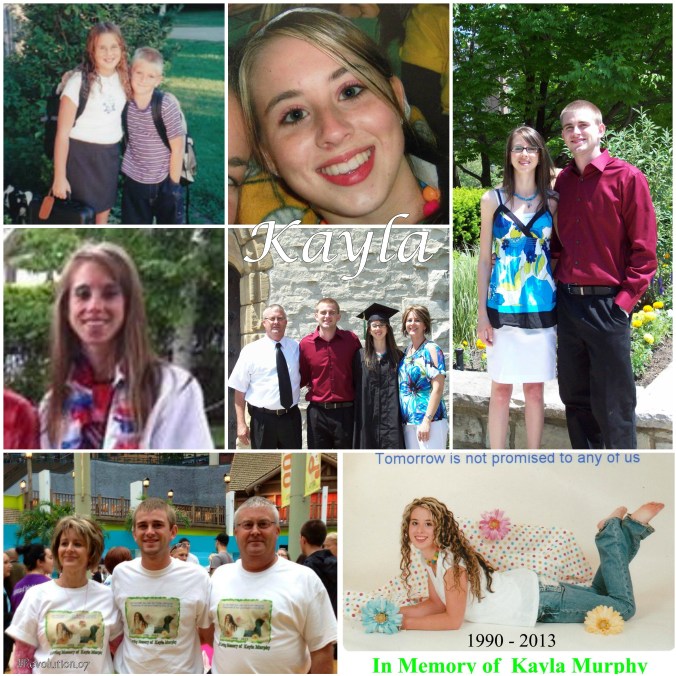
My name is Angie Murphy and I would like to share with you our story of how an eating disorder turned our lives upside down. Anorexia Nervosa by definition is an emotional disorder characterized by an obsessive desire to lose weight by refusing to eat. This crippling disease took the life of our oldest child, Kayla, on July 13, 2013, 18 days before her 23rd birthday. Kayla was everything we could’ve asked for, she slept thru the first night home from the hospital, potty trained at 21 months, and learned to talk at a young age. As Kayla grew up she always appeared confident. She tried basketball, played in band and was even named Miss Kellogg. In doing all these things Kayla began to strive for perfection, which in time, we learned that perfectionism is or can be a starting point of an eating disorder. I remember her doing home work in 9th grade, she would be up all night re-writing things to make sure it was perfect. This perfectionism started to play a roll in her health, she would be up very late every night, not getting enough sleep, not eating properly, and always stressed out. We as parents, nor her teacher understood what was going on. We just thought she was concerned about getting good grades for college and was working way too hard to obtain them.

It was right before Kayla started 10th grade, that she made a comment about wanting to starting eating healthier. This wasn’t something that seemed alarming because we were always on the run and had a tendency to not always eat healthy. By January Kayla had lost a lot of weight, again we attributed it to the stress and anxiety from all her home work. My husband, Marty, said she needed to see a doctor to figure out what was going on. It was at this time the doctor diagnosed Kayla with an eating disorder and that some of her organs were in the beginning stages of organ failure. Our Doctor then referred us to Park Nicollet for admission to treatment. Kayla was so good about cooperating, but too far under the control of the eating disorder that she didn’t really understand how deadly this disease could be. But then again, none of us really did.

As we were going thru this whirl wind of facing the reality that our daughter has an eating disorder, we were so confused. My sister-in-law, Jean, also had an eating disorder (anorexia nervosa and bulimia), being that we didn’t live near her, we were never educated on the mental illness. Like so many others, we didn’t understand why she just couldn’t eat.  Kayla and our son seen how the eating disorder would cause someone to act in such a self destructive manner. But because we were not educated on the mental illness none of us understood why it couldn’t be fixed. We didn’t understand the signs that had built up to  the point of where Jean was at. This really goes to show you how naive we were to this mental illness. Eating disorders were something people didn’t talk about. That’s why it is so important to talk about them – to stop the stigma and to educate everyone on the early signs.

When Kayla was admitted to Park Nicollet in the Twin Cities we were so scared. She was there for several weeks, but bound and determined to beat it! After inpatient and weeks of driving daily 180 miles round trip to the Twin Cities so she could do outpatient treatment, she had almost restored her weight and learned coping skills on how to fight off what is referred too as the eating disorders “voices”.

Between 10 and 12th grade Kayla worked with several psychologists, some helpful more helpful then others, but during this period home life was horrible. Between the four of us, I felt like I had to always be there to make everyone’s life better. My husband and son wanted to help, but that usually ended up in arguments. Being so naïve to the disease, we really didn’t know how best to help Kayla at home. Eating disorders are so difficult. Sometimes when you try to encourage them, you are actually feeding the disorder. The tension at home was an everyday occurrence. We are a very close family but there were days I didn’t know if we could continue to live together. Our son didn’t really say a lot, he watched, but I know it was very painful to see his sister go through this. Fighting this disease takes everything out of them and you

Kayla was in and out of treatment several times over the four years she was in college. The most frustrating thing was when she turned 18 and legally became an adult. The doctors no longer had to tell us anything and Kayla could discharge herself from treatment when  she wanted. She wanted to get better so bad but the voices were so strong that it was hard for her to always make decisions that were most beneficial for her overall health and well being.

There are only a few treatment centers in Minnesota and Wisconsin that work specifically with eating disorders. The problem at that time, was they were so inconsistent on treatment methods. Many would get the patient to a stable point and then release them to go home. There wasn’t much guidance on helping the patient and family find a qualified psychologist or psychiatrist. They didn’t teach you how to go grocery shopping or how to really cope outside the treatment center. There wasn’t family education centers or meetings like they have now, that help you better understand the disease, or support groups to speak to other families that are going through the same thing, for additional support.

I think my husband was more realistic about Kayla’s passing, he never said it, but always worried about losing her. I was always a little more optimistic. I spoke with Kayla everyday and she was always trying to fight the voices, reminding her to stay strong. We would search for new doctors to help in anyway possible. Because the disease was so strong on top of a genetic link, I didn’t think Kayla would ever really have a full recovery, but I never imaged it would take her at age 22.

We will never have the answers to understand why this happened. After Kayla passed we were amazed by how many people came forward and said if it wasn’t for Kayla and her story they wouldn’t be here today. Kayla was such a caring and giving person. She touched so many lives, and that is our inspiration. Through this whole journey she/we were never ashamed of what we were going through, so we will continue to tell her story and continue to reach out to help others that are also dealing with eating disorders. We will continue to help educate where we can, continue to help raise money for the National Eating Disorders Association and The Emily Program Foundation in the Twin Cities. Kayla lived by many sayings, but two of my favorites were – “be the best you can be today because tomorrow is not promised to any of us” and “we can stand still and watch, or we can stand strong and fight”.

Do you feel there are other driving factors that reinforce eating disorders aside from genetics?

Yes! Eating disorders aren’t the average dinner table conversation. Which is why it is so important to talk about them – to stop the stigma and to educate everyone on the early signs. Eating disorders can show up for a variety of reasons, they aren’t just learned behaviors, it can be genetic, or how they are “wired”. I also believe society plays a big role in these types of diseases. There is a lot of pressure to be beautiful, to be thin, to be smart, and to be successful. This is a lot of pressure for our children at any age and I feel these are also triggers that start the process. Anxiety, depression, OCD and/or feeling as if they can’t measure up or aren’t good enough, can be some of the beginning signs of eating disorders or the onset of mental illness. As they grow and these issues and thought process strengthen, they start to control their life. We start to look for ways to find control in our lives and as a result, our body chemicals used for coping – diminish. This makes it the perfect time for an eating disorder to develop. What starts as having control over something, eventually begins to control you.

This isn’t just something that effects girls either, I do feel young boys are taught that they should have that perfect “10” for a girlfriend. This leads to a lot of bullying to those that don’t fit the bill or measure up to the standards that our society, communities and peers place. It is both genders that have this perception of being “perfect” in all realms. There are continually more boys/men that are being treated for eating disorders as well. We see this when we look at the pressure sports puts on our athletes. Telling them they need to be lighter to wrestle or leaner to run faster. It’s another aspect of their life they feel pressure from and one they may feel they have more control over. This plants a seed that weight is the driving force behind their performance. We, as a society, put attention in places where it’s least effective and needed, planting seeds that grow into something damaging. Which begins building forests of judgement and stigma around important and necessary issues such as these.This may not be something that affects everyone, but with millions suffering from eating disorders it is definitely something to be concerned and talked about.

Have you noticed an increase in education around Eating Disorders since Kayla was in treatment?

Yes, it’s getting there. They are now working on requiring teachers to be more educated on the signs that may lead to early detection of an eating disorder. Early high school age is a common time for eating disorders to develop but there is no age limit. Eating disorders have been diagnosed in children as young as five, but people such as Jean, who passed away from Anorexia Nervosa wasn’t diagnosed until she was in her late 20’s. Again, it starts with the conversation around it, just being more aware of it, asking more questions, and being advocates for each other – within the homes and the schools. We are gaining ground, slowly but surely.

*If you or anyone you know may struggle with a possible eating disorder, please know there is resources and help! Please contact any of the following

NEDA (National Eating Disorders Association) https://www.nationaleatingdisorders.org/find-help-support

The Emily Program at https://www.emilyprogram.com/locations/minnesota

Foundations such as these are vital in our communities to help others struggling with Eating Disorders. Just as we help fund many other research facilities, these programs are equally important and often don’t the attention they deserve, due to lack of awareness. Please consider donating to The Emily Program Foundation at https://app.etapestry.com/onlineforms/TheEmilyProgramFoundation/donate.html

**Please share this important story and topic on social media, for you never know who could benefit!**

Inside Out – E.D. with Mallory

blog-mal-1-pic

 “Why can’t you just eat?” “Why don’t you quit eating?” “Why would anyone want to vomit after every meal? Gross!” “Why can’t you control the thoughts in your head?” “Why can’t you just be happy?” “Why can’t you just calm down?” “Did you see how much weight she’s gained – Ew!” “Put some meat on those bones” “If you were hotter – I’d date you” “God I’m so huge” “I hate my body” “I wish I looked like her” “Why did I have to get my mom’s hips?” “Is it so much to ask to be Beyonce?”

Welcome to the 21st century – where a majority of today’s focus rests on physical appearance. Too fat, too skinny, thighs are too big, ass could be bigger, take some from the gut, put it in the breasts, oh and the extra could be nicely added to the lips, I mean we hate to waste any, God only knows there’s plenty to spare! Welcome to the thought process of a majority of today’s population! If we don’t say them, I can guarantee we think them far more then anyone cares to admit! Whether about others or ourselves, the fact that this much thought goes into one aspect of the millions of things that make up a person – is a problem.

These are the ugly little seeds that are constantly being planted in not only our heads, but our kids’ heads on a daily basis. We stand in a check out line at the grocery store to thumb through the latest magazine with the latest named sexy actress, they watch commercials with half naked men and women, they hear adults talk about how much weight they’ve gained or how they shouldn’t be eating anymore, we hear men laugh and joke about sexist remarks or the ass on the waitress, or the lyrics to songs that reinforce what a “10” should look like.  Adults and children alike are constantly being reminded of the importance we’ve placed on body image – what seems harmless is often more harmful then we believe. We are setting precedence of what is the “norm”, leaving people to think that the only way to ‘fit in’, to be accepted or to be worthy of love – is to mirror these size 2 women, or ripped men. The fact is, that constant conversation, in any manner, around body image, good or bad – is the overall problem. You add these subconscious thoughts to a child who already struggles with things such as depression, anxiety, bi-polar, OCD or just plain fitting in, and you’ve set them up for a psychological disaster that could easily put them into place where control is no longer theirs.

This is a 2 part series on eating disorders, this entry showing what the inside looking out looked like from Mallory’s viewpoint. Angie will tell us what it was like from the outside looking in, watching her daughter endure, and eventually losing her life from Anorexia. This is another issue few care to familiarize themselves with because we often feel it’s nothing we need to worry about with our children. However, I think you, like I was, may be more surprised then you think about the stigma, signs and symptoms that can be associated with these diseases.

My name is Mallory Schad and I am in recovery from an eating disorder. My hope in sharing my story is that I can help shatter the stigma wrapped around mental illnesses. Yes, eating disorders are a mental illness, it’s not something you choose. I believe I was born with this disease. I believe I will always battle this disease, but most of all, I believe I can conquer this disease. Here is my story.

What was your “official diagnosis” and what does that mean via text book – more importantly – what did that mean to you? Has this been something that has always plagued you?

For as long as I can remember, I have struggled with body image. I was a “tomboy” growing up. I wasn’t your typical “girly girl” – I liked hanging with the boys, and dressing like one. My mom was supportive of my taste and always took me shopping in the boy’s department. She never tried to change me, nor told me I needed to look a certain way. So, for the most part, I dressed like a boy. That’s what I liked. Often times in public, I was mistaken as a boy. I felt ashamed of what I looked like, due to others’ reactions and perceptions of me. It was confusing. I was just being me. What is wrong with being me?

It was 7th grade where I finally gained some freedom from outside remarks regarding my gender. I was becoming more interested in make-up and grew my hair long. Funny how people stop ridiculing when you seem to appear “normal” or fit a mold that makes them comfortable. Aside from the harassment I endured from outsiders concerning my gender, there was another factor that I believe played a role in my developing disorder. As a 7th grader, I was a young athlete participating in sports at a higher level. Because of this, I became close with peers and fellow athletes that were older then me on a daily basis. I looked up to them and I felt like they had taken this shy little 7th grader under their wings. I was thankful for them. Exposure goes with the territory of hanging with students older than you. The topics I discussed with my friends in school, were very different from those that I overheard after school during practice. Topics discussed were natural for young girls their age, but for a 12 year old, it was very eye-opening. These girls were going through puberty and experiencing their bodies changing and developing. Naturally, I then became aware of my own body. I remember hearing others talk negatively about the size of their bodies. Comments were made about “being fat” or “having big legs”, etc. I remember a teammate crying at Cross Country practice, telling the coach she “had more weight to carry”, therefore had a harder time keeping up. I knew the weight had nothing to do with her performance. She was not overweight.

I stepped on the scale as a 12 year old and glared at the number I saw staring back at me – 89 pounds. You can’t let yourself get above 89 pounds. I remember feeling scared for having that thought go through my mind. I didn’t know where it came from, so I brushed it aside. I started becoming more aware of my changing body. I was gaining muscle as an athlete and noticed my thighs getting bigger. They touched when I walked. How come the other girl’s thighs don’t touch when they walk? How come my thighs are so HUGE??? “I HATE my thighs”. Fast forward to 9th grade. It was the beginning of Cross Country season. Apparently, I had grown over the summer people felt it was necessary to comment on other people’s bodies, as if it was worthy of discussion. I’ll never forget having 3 people in one day comment on my weight gain. “You look bigger out there running – Strong! Other people had noticed it too. That one stuck with me. I didn’t hear the “strong”, I heard the “bigger”. I went home after practice and paced in the garage. I was filled with rage. “Why was my body anybody else’s concern? I was pissed. I only wished I stayed pissed and didn’t turn that rage inward on myself.

I remained aware of my body through high school. As I entered 11th grade I started developing some disorder behaviors. I purged for the first time when I was 15. It wasn’t then that I fully engaged in this disordered behavior, but I definitely played around with it. During college, I experienced the inevitable “freshman 15”. I was 23 when I started binging and purging. This cycle went on for about 5 months, I’d lose weight and people would notice. They commented. I continued in my cycle of destruction. I saw a psychiatrist because I knew my behavior was unhealthy, but inevitably stopped going. I didn’t think I needed the help. I somewhat snapped out of that cycle of destruction for the time being, only for it to return.

When at your lowest, what did your mental, physical and emotional state consist of? If you could give us a briefing on what went on in your world on an average day, as well inside your head – what would that look like for you.

At the age of 24 I moved to Bemidji, MN for a change of pace. This became the best and worst time of my life simultaneously. In the fall of 2012 I decided I needed to step up my game to get in shape for my cousin’s upcoming destination wedding that February. What started as going to the gym, quickly became being obsessed with the numbers on the exercise machines. Every day I worked out – having to run longer, while increasing resistance and burning more calories. Something HAD to be more intense than the day before.

I was diagnosed with Orthorexia. For those of you wondering, the ‘text book’ version of Orthorexia is an “unhealthy obsession” with otherwise healthy eating, a term which literally means “fixation on righteous eating.”Along with this came the same mindset around food. Everything had to be strictly “the best”. When the various work out regimens weren’t enough, I decided I wanted to get back into running. I ran every day. It was my outlet, or so I thought. Every time I ran, I had to beat the pace from the day before, always having to push myself harder. This sort of mind set is what sent me into a downward spiral. It was “all or nothing” for me. There was no grey. Black and white thinking was my new norm. 

At my lowest weight, I was not living a life for myself anymore. I was living for the disease. There was zero space in my mind for anything other than disordered thoughts. I was consumed. My dietary intake became very rigid. I developed numerous food rules which included constant restrictions, followed by punishing behaviors. Anything else I ate outside of my obsessively strict and rigid guidelines, was done because I was in the company of others, because I felt I needed to hide my odd eating habits. This was my “FIT IS THE NEW SKINNY”. This was my “I’M GETTING HEALTHY” bullshit the media feeds you to believe. But nope, this was something else. This was the diet industries damaging message it sends to the public. Eat this, not that. Do this, to look like this. Looking like this, will make you happy. Wanting to look a certain way, became an unattainable nightmare.

 I was also diagnosed with body dysmorphia. Perhaps for some people they can work out and maintain a rigid diet and truly be healthy and happy. For someone fighting a mental illness, it became insanity.

I became so obsessed with counting calories that I started purging to restrict my caloric intake. I would eat small portions of food, believing them to be large, and then purge afterward. Often times after eating, I would feel such intense guilt and anxiety. Purging became my escape from the anxiety. Sometimes during the day I would go in a cycle of eating and purging for hours. I slept a lot to keep my mind from thinking about food. I wanted to eat all this delicious food that everyone else was having around me, but I couldn’t allow it. It was simply off limits. 

I also developed behaviors called “body checking”. I would measure my wrists and certain parts of my body. I would put certain articles of clothing on to make sure they were still lose, or that they were becoming more lose. I would look for protruding bones in my body, running my hands over them obsessively to make sure I could still feel them. I would take “progress pictures” and compare what I looked like previously to past pictures. I was so fixated on gaining muscle. I couldn’t pass a mirror without looking in it. But the thing was, my mind was playing tricks on me. Of course those bones aren’t protruding anymore and the pants are growing tighter and you look huge in those pictures.” Back to the gym, and you better go to bed hungry”.  The anxiety around that was paralyzing. This cycle was on repeat and this was what day in and day out consisted of for 2 years.

In the end, I did lose the weight. I did gain muscle. Physically, on the outside, I looked “fit”. I received compliments regarding my appearance, which only fueled the fire inside to keep the cycle going. What I wasn’t noticing at the time, was that it was never enough. I could lift a certain amount of weight, run a certain distance at a certain pace, but nothing was ever good enough. There was always room for improvement. This was my high, but also my imprisonment, my punishment. I often times got down on myself for not being a better student in college and partying too much in my early 20’s. I felt like I was turning my life around by achieving this “healthy lifestyle” and that I was making better choices for myself.  I wasn’t healthy though. I was exhausted all the time. My memory was shot. I would blackout often, felt weak and suffered with chest pain due to tears in my esophagus from purging.

Mentally, I felt at complete war with myself. I was not living my life at all. I was living for the disease. I was on a high from “controlling” my dietary intake and working out, but at the same time was severely depressed and didn’t know it.  

What were the general feelings that arose around food in general?

Immense fear. My underlying anxiety just overflowed to food, instead of having anxiety without consumption, I had it with the consumption. If I was consuming something I deemed “safe” I felt empowered. If I was out to eat, or eating something with family or friends that was not my choosing, I felt immense fear and anxiety. I wondered how it was prepared, and what ingredients were involved, which led to panic. I was not shy about sneaking off to purge the food either.

There was also sadness and guilt. I knew what I was doing was unhealthy, but I couldn’t stop because it made me feel so good. When I was eating inside my comfort zone it felt like a high. Everything was a judgement on myself, I obtained self-satisfaction by controlling my urges to eat what was doomed to be “bad for me”.

Grocery shopping took hours. Food was strange for me. Think of it as a drug that you only need a bit of. How do you start or stop when you feel so out of touch with the reality of it? When it controls you?  How do you develop a healthy relationship with it? Food is sort of like drugs in a sense, but also very different – because you need it to survive.

At what point were you aware this had become something beyond your control that needed professional help?

After being told by a doctor I was clinically malnourished, I started seeing a counselor, but she didn’t specialize in in eating disorders. In fact, noone in my area did! In all honesty I figured since I was there, I’d just get some good life counseling and tips to get myself back on track with school since it had taken the back burner to my rigid exercise routine. Besides, I never said I had an eating disorder, I just had “tendencies”.

After about a month, the counselor asked me if I’d consider inpatient. I thought she was crazy – no way! Eventually, she said she couldn’t help me, as she didn’t want to see me walk through the door again continually wasting away.  She quoted me previously saying “I’d give anything to have a healthy relationship with food” and made the analogy that – walking into a grocery store is like shopping for drugs for someone with a drug addiction. It’s insane. She told me it was time to seriously think about treatment. And I did. I called the Emily Program in the Twin Cities on a Friday and was admitted the following Monday.

                    How many times did you attempt help and was it actually helpful?                           If so, what parts did you feel were most detrimental in your journey to healing?

I attempted to seek help a few times, but was never committed. I would lie to counselors and tell them I was better. I wasn’t ready. I didn’t get help until I was completely submersed in my disease.  Eating disorders are really good at telling you that you don’t need help, or that you’re “not sick enough”. Master manipulators they are. It’s tough, because there is so much emphasis surrounding healthy eating and exercise, that it can be hard to tell when you have crossed the line into unhealthy habits.

How long have you been “free” so-to-speak from this disease and who are you since this journey as you continue to heal?

The decision to choose treatment over the comfort of the disorder was the hardest choice I’ve ever had to make. I knew my world would be flipped upside down. I knew it would be hard. I did 4 months of intensive outpatient. 4 days a week I would spend the day at the Emily Program. Re-feeding, dietary classes, group therapy, individual therapy and yoga. I’m not going to lie, the process was painful, but also very liberating learning to disconnect and free myself from it.

My mental state was at an all-time low. I struggled with suicidal ideation, major depressive disorder and anxiety. My body was in immense pain for a few months from the changes it was enduring. Week by week though, I learned about the disease and how to cope. I had no choice but to choose recovery after having my eyes opened to the dangerous lifestyle I had been living.

I’d say it was about 3 months after completing treatment that I became comfortable talking about the disease. I was still very uneasy and untrusting of my body right after treatment. It took some time to take the skills I had learned in treatment and put them to use on my own. I slowly became comfortable with the process and became more open to discussing it.

Today, I want to speak more freely and openly about the disease. I want people to be aware of it and to understand it. It’s so very misunderstood and there can be so many varying layers to it. I want people to know they are not alone, and most importantly that they are not abnormal for having the thoughts/behaviors they do. I want people to know there is help out there and that it’s possible to be freed from this deadly and agonizing disease.

Do you feel this still controls a large part of you, or something you’ve been able to slowly distance yourself from?

I have my good days, bad days, and everything in between. For the most part, my days are good, but there are days I still struggle with my current size and weight. There are times I wish I was smaller, or more fit. But then I remember what I felt like when I was those things. I wasn’t happy. I was sick. I was slowing wasting away in all aspects. Every day takes work. There isn’t a day that goes by that I don’t have to stop myself at some point and revert my thinking. It’s been 2.5 years since treatment.

I still struggle. I’m not where I used to be, but I know it’s going to take time. I’ve come a long way and I feel hopeful that it will only get better. It took a lot of work to get to where I am now.

What do you feel is the biggest driving force behind eating disorders? 

It can be very different for everyone, but often times I think it’s a fight for control mixed with societal beauty standards. But more times then not, eating disorders tend to mask other issues. I know for me, when I was in the depths of the disorder, it wasn’t beauty driven. It was about control, obsession and perfectionism. I had underlying issues that I needed to deal with and focusing on “getting healthy” felt like I was bettering myself.  I was masking.

I think the younger generations are very susceptible to developing eating disorders. There is a lot of pressure to fit in and look a certain way. I also believe that eating disorders do not discriminate. Any person at any age can fall victim to the disease.

How has this changed the course of your life? Is this a topic of conversation you feel deserves more time and light?

I’m not really sure how it’s changed the course of my life. I want to reach out to others and make myself available. My goal is to be a mentor to those struggling and to spread awareness and education. I want to help others along their path as I continue to learn, grow and heal myself.

Eating disorders take more lives than any other mental illness. That’s a staggering statistic, so yes, this disease absolutely deserves more time and light.

If you could speak to this age group- or any girls/women/men either at that turning point in their life-or already suffering, trying to hold on- what would you say?

I would tell them there is more to life than what they are desperately holding on to. That I know how terrifying it is to let go of the comfort the eating disorder provides, but that nothing compares to the freedom that treatment and recovery provide.

Help is out there. Trust in others. Trust in the process. Find a support system and reach out to people. Treatment and recovery is a real ugly bitch. It rips you wide open. You have to take a good look at yourself and question what you want for yourself in this life. I’d tell them it’s tough, but it’s so worth it. Most of all, it might not be your hardest battle in life. Choosing to fight preps you for the rest of whatever life throws at you. You learn about yourself, and you learn how to truly enjoy life.

I would tell them that we are all individuals and that we all have struggles. To look within and figure out what it is that is causing pain – really dig into it. Often times, eating disorders are masking a bigger problem.

*If you or anyone you know may struggle with a possible eating disorder, please know there is resources and help! Please contact any of the following

NEDA (National Eating Disorders Association) https://www.nationaleatingdisorders.org/find-help-support

The Emily Program at https://www.emilyprogram.com/locations/minnesota

Foundations such as these are vital in our communities to help others struggling with Eating Disorders. Just as we help fund many other research facilities, these programs are equally important and often don’t the attention they deserve, due to lack of awareness. Please consider donating to The Emily Program Foundation at https://app.etapestry.com/onlineforms/TheEmilyProgramFoundation/donate.html

**Please share this important story and topic on social media, for you never know who could benefit!**